As gas prices climbed across the D.C. region in early March and more offices reopened, more people hopped on Metro trains and buses, according to the Washington Metropolitan Area Transit Authority.
People riding Metro more than doubled in March 2022 compared to March 2021. On average, 445,000 people rode either the bus or train weekdays during March. Of those, 205,000 took Metrorail and 240,000 took Metrobus.
Metrobus weekday ridership increased by 57% and rail ridership went up a 124% compared to March 2021.
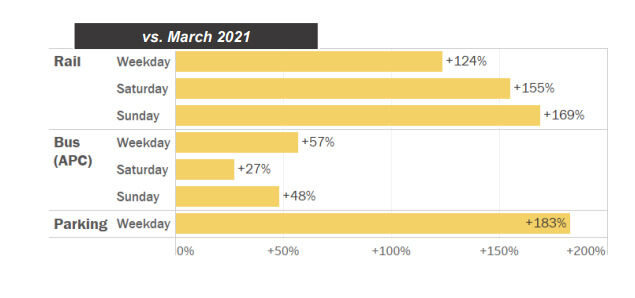
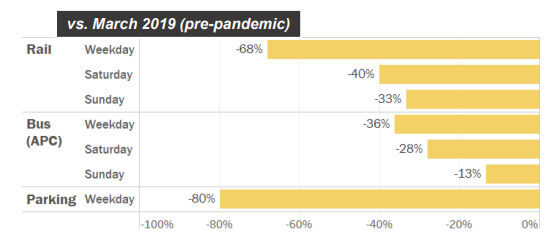
Rail ridership was 32% of March 2019 pre-pandemic levels on weekdays, with higher rates on weekends. Bus ridership was 65% of pre-pandemic levels on weekdays, and nearly 90% of Sunday levels.
Meanwhile, the number of train cars available for riders was reduced by over 50% after Metro took the 7000-series cars off the tracks. But Metro on its latest ridership snapshot said trains were crowded “about 2%” of the time.
The snapshot also showed rail ridership increased throughout March, while bus ridership increased in the first half of the month and then fell slightly.
Gas prices may have pushed more people toward Metro. In the first week of March gas prices increased in the D.C. area by about a dollar in a little over a week, according to Gas Buddy.