Between Georgetown, The Wharf, Navy Yard and National Harbor, there are now many ways to enjoy the Potomac River recreationally, and the newest is a nod to a Tiki bar.
Jack Mayer and Jack Walten, who brought the first pedal boat bars to the Potomac with the Paddle Club, have launched Potomac Tiki Club, an 18-passenger, thatch-roofed party boat that sails out of Georgetown Harbor.
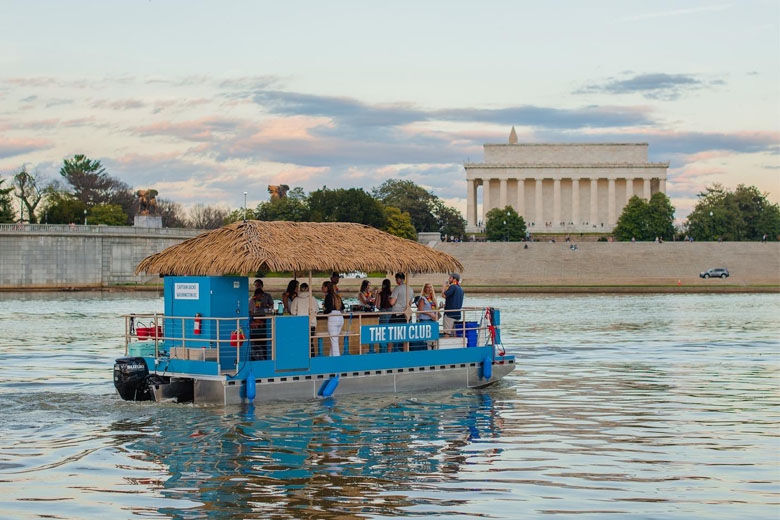
The 90-minute, motorized cruises include tour views such as the Key Bridge, Georgetown University, the Lincoln Memorial and Washington Monument.
There is a bar in the center of the boat, as well as a lounge area and an onboard bathroom. All cruises come with a dedicated bartender (or “boatender,” as the operators say).
Anheuser-Busch beers and canned cocktails are available for purchase, along with wines and seltzers. Beers start at $4.
The Potomac Tiki Club is $45 to $55 per person.
The Tiki Club is part of Sea Suite Cruises, launched by Mayer and Walten, both Arlington natives, in 2018 with Potomac Paddle Club.
Potomac recreational options now include traditional riverboat dinner and brunch cruises, privately-captained smaller speed boats, kayak and paddle board tours, peddle boat bars and water taxis.