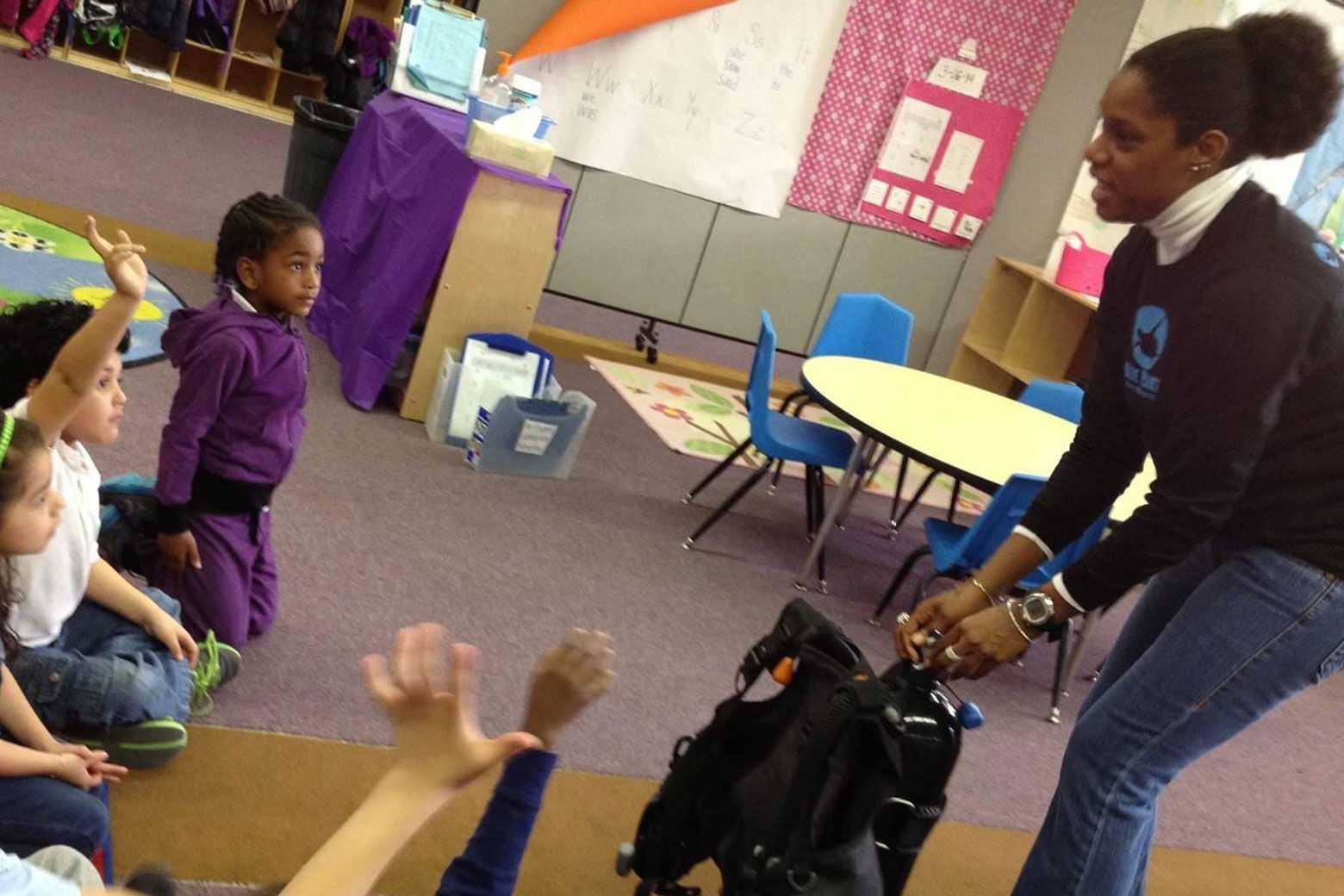
From oceanography to marine biology, the National Association of Black Scuba Divers is growing its mission to educate Black kids about underwater careers.
The group, founded in the 1990s, currently has about 100 members in the District and 1,000 nationwide.
“We have new clubs forming all over the time, all over the country and sometimes all over the world,” said Andrea Williams, the organization’s national vice president.
Williams, a D.C. native, said their mission is to bring along the next generation of divers to help, serve and protect the oceans.
“We’re slowly changing the profile of what a scuba diver looks like, who a scuba diver is and what they do,” she said. “If they don’t know about it, they can’t help.”
NABS is focused on getting more Black residents into pools. They also offer an annual youth summit and host events for anyone interested, regardless of whether they have experience in the water.
“That usually gets folks hooked, and we then get them to the next step of working on their open water certification,” she said.
As a strong supporter of coral restoration, Williams has watched one of her recent graduates with a degree in marine science accept a position as a National Geographic underwater explorer.
Williams said scuba diving offers a whole new world of possibilities, whether as a career or just for fun: “The greatest thing we offer is the access to families thinking of nontraditional ways to explore career paths.”
Learn more about NABS and the D.C. group online.