
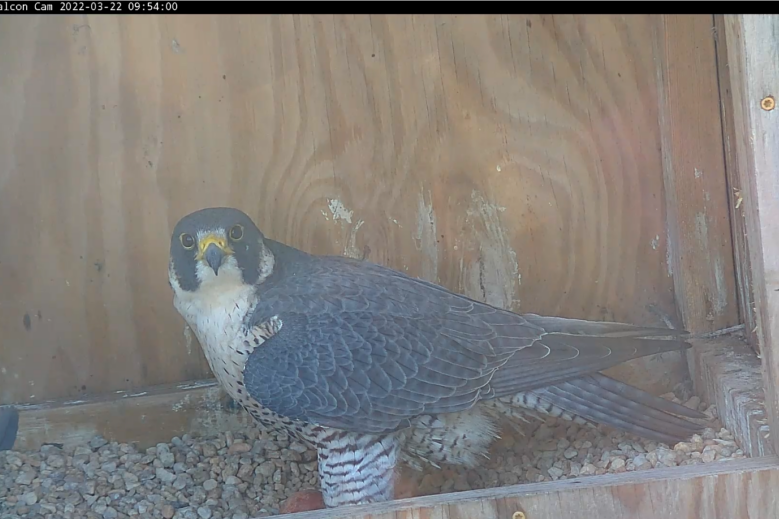
Virginia’s Department of Wildlife Resources said that falcon cam watchers were treated to a surprise Tuesday, when the morning sun shone on a newly-laid Peregrine falcon egg.
Officials with the department said the egg was likely laid overnight, but visible to bird watchers who saw the cam in the early morning.
“The first egg of 2022 appears to have been laid sometime overnight as it was not seen on camera around 11 p.m. when the lights went off on (March 21),” Virginia DWR said.
This falcon, the department said, has the potential to lay anywhere between three to four eggs. All of her previous clutches contained four eggs.
“Time will tell if this pattern will continue for a third year in a row,” the department wrote, “or if we will begin to see some variation in the number of eggs laid.”
If you missed the egg, don’t be alarmed — the department plans to provide videos of additional eggs being laid when possible!
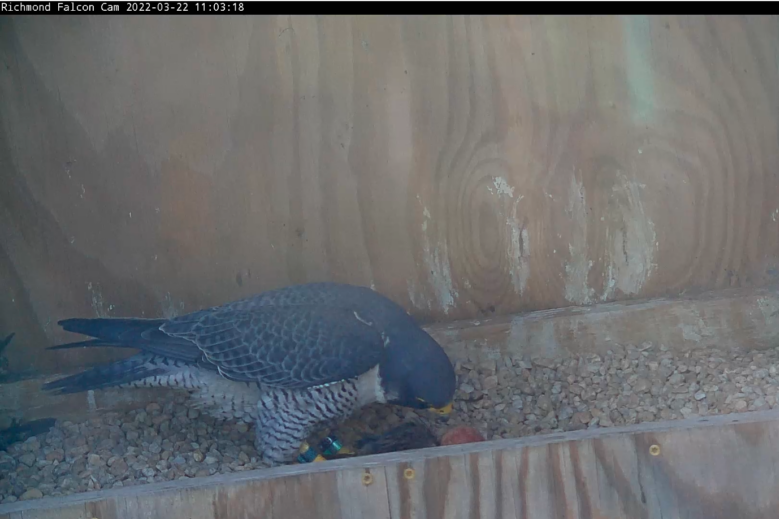
“Falcon eggs are typically laid in intervals of 48 to 72 hours so pay close attention to the Falcon Cam between 3/24 and 3/25 and you may be lucky enough to catch the second egg laying event,” the department said.