
Parking meter season in Delaware’s Rehoboth Beach will see a few changes this year following a board of commissioners vote Monday.
The time frame and the parking rates are getting tweaked.
The city will add roughly three weeks to the parking season. That will match other lower Delaware vacation destinations: Dewey Beach, Bethany Beach, South Bethany and Fenwick Island.
The city’s parking meter season will now run May 15 through Sept. 15 — a shift from the Friday before Memorial Day through the second Sunday after Labor Day.
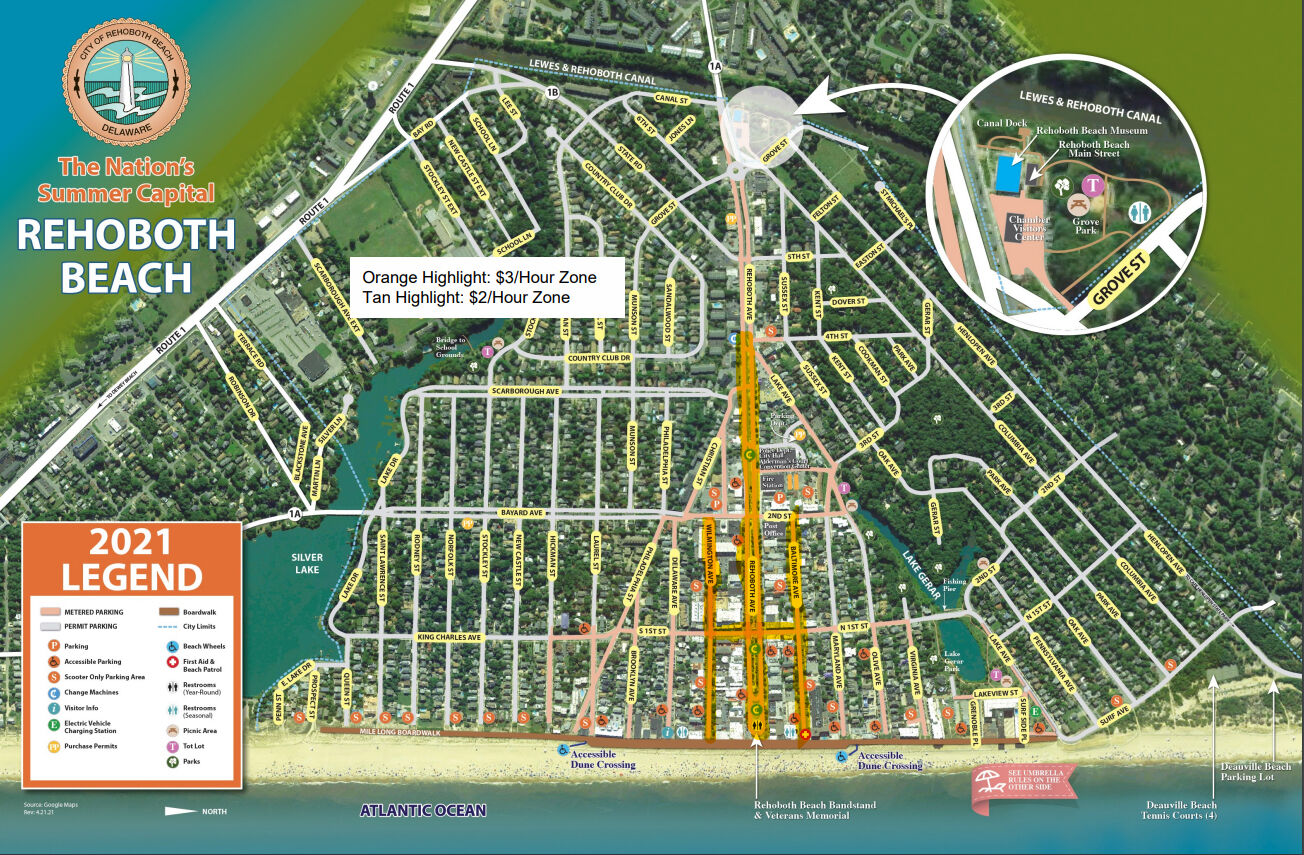
The parking rate will become a consistent $3 an hour throughout the city. That’s the rate in the core commercial district that includes Rehoboth, Baltimore and Wilmington avenues.
Before, meters on side streets near the beach charged $2 an hour.
“The changes adopted by Commissioners provide consistency and simplicity to the City’s parking guidelines,” City Manager Sharon Lynn said in a statement. “Parking-related information will now be easier to communicate and understand.”
In January, the city commissioners approved the purchase of 77 new parking meters.
Parking permits are enforced from 10 a.m. to 5 p.m., and metered spaces require payment from 10 a.m. to 10 p.m. Parking is free after 4 p.m. Mondays, according to the city’s website.