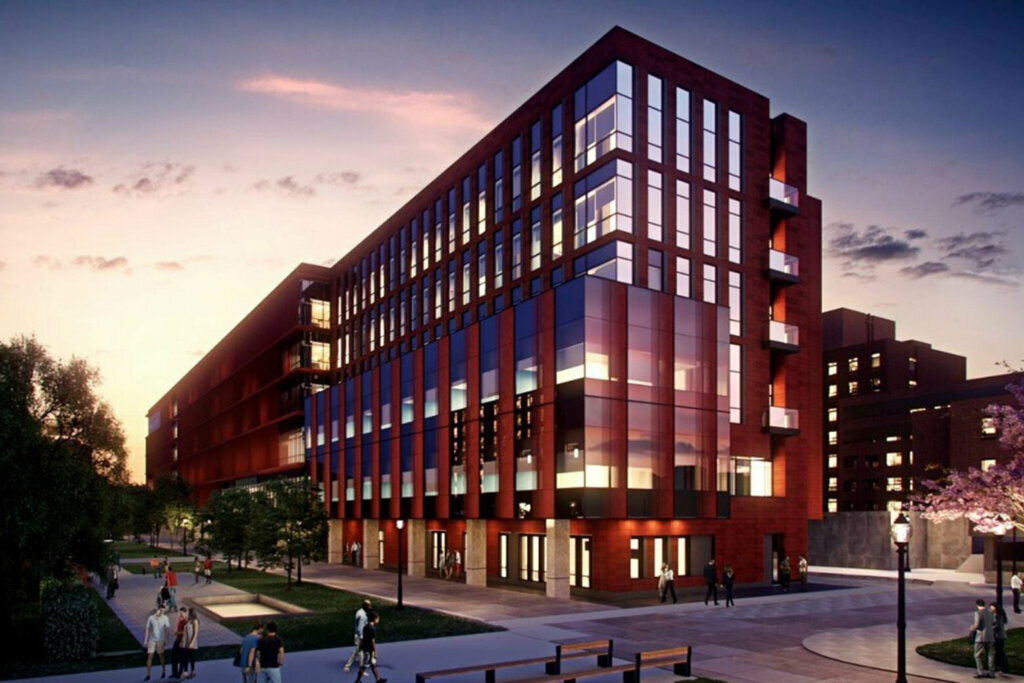
Venture capital investor and philanthropist Grant Verstandig has gifted $50 million to MedStar Georgetown University Hospital through his Verstandig Family Foundation for the hospital’s new medical and surgical pavilion, currently under construction.
It is one of the largest donations ever made to health care in the Washington, D.C., region.
When complete in 2023, the 477,000-square-foot hospital addition will include 32 exam rooms, 31 operating rooms, a new emergency room, 156 private patent rooms and a rooftop helipad.
Its state-of-the-art services will focus on complex diseases, including oncology, gastroenterology, neurology and neurosurgery, orthopedics and transplants.
The 32-year-old Verstandig founded D.C.-based Rally Health, a patient-centric digital-focused health company, in 2010. In 2017, UnitedHealth Group acquired Rally. He remains senior adviser to the company’s chief executive officer.
Verstandig has backed numerous technology startups, including Gaithersburg-based immunotherapy company NexImmune, where he currently serves on the board. He is on the boards of the Greater Washington Partnership, International Spy Museum and the Third Option Foundation. He is also an adviser to the National Security Agency.
“With its state-of-the-art capabilities, the Medical/Surgical Pavilion will completely transform health care options in the region, bringing unparalleled patient care and advanced technology to the area,” Verstandig said in a statement.
During the COVID-19 pandemic last year, the Verstandig Foundation donated $750.000 to MedStar Health for the procurement and delivery of Personal Protection Equipment.