Developer Skanska will break ground on its newest D.C.-area project in November, an apartment building in D.C.’s NoMa neighborhood.
The 13-story building will be called OZMA, at 44 M St., N.E.
New York-based Skanska is financing, developing and managing construction of the project.
OZMA is expected to be completed in 2024, and will have 275 residential units, 7,900 square feet of retail space, a “secret garden,” an art studio, social spaces, a rooftop lounge, a pool and what Skanska calls tranquility cabanas. (“A serene escape within the building’s green outdoor space to enhance resident wellness” is how a spokeswoman for Skanska at The Brand Guild describes it.)
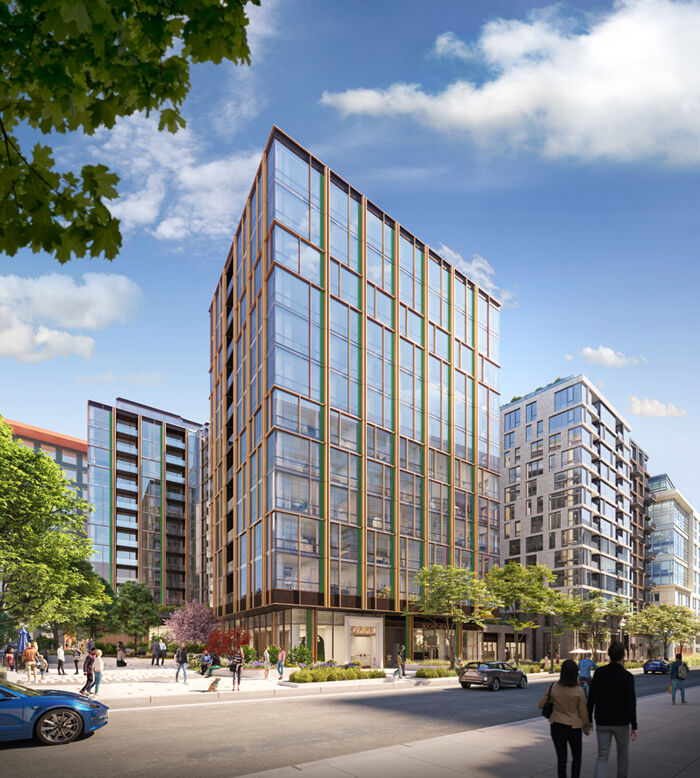
The building also will have a tearoom connected to its atrium.
Skanska said it expects the building will be the first residential building designed to meet LEED Gold, Fitwel and WiredScore certifications.
Skanska’s other projects have included 2112 Pennsylvania Ave., where it has its D.C.-based offices, the first commercial office building in D.C. to receive the WELL Heath-Safety Rating and 1776 Wilson Blvd. in Arlington, the first LEED v3 Platinum project in Northern Virginia.
Skanska is an infrastructure company, having built the First Street Tunnel and is responsible for the 11th Street Bridge reconstruction and adjacent intersections.