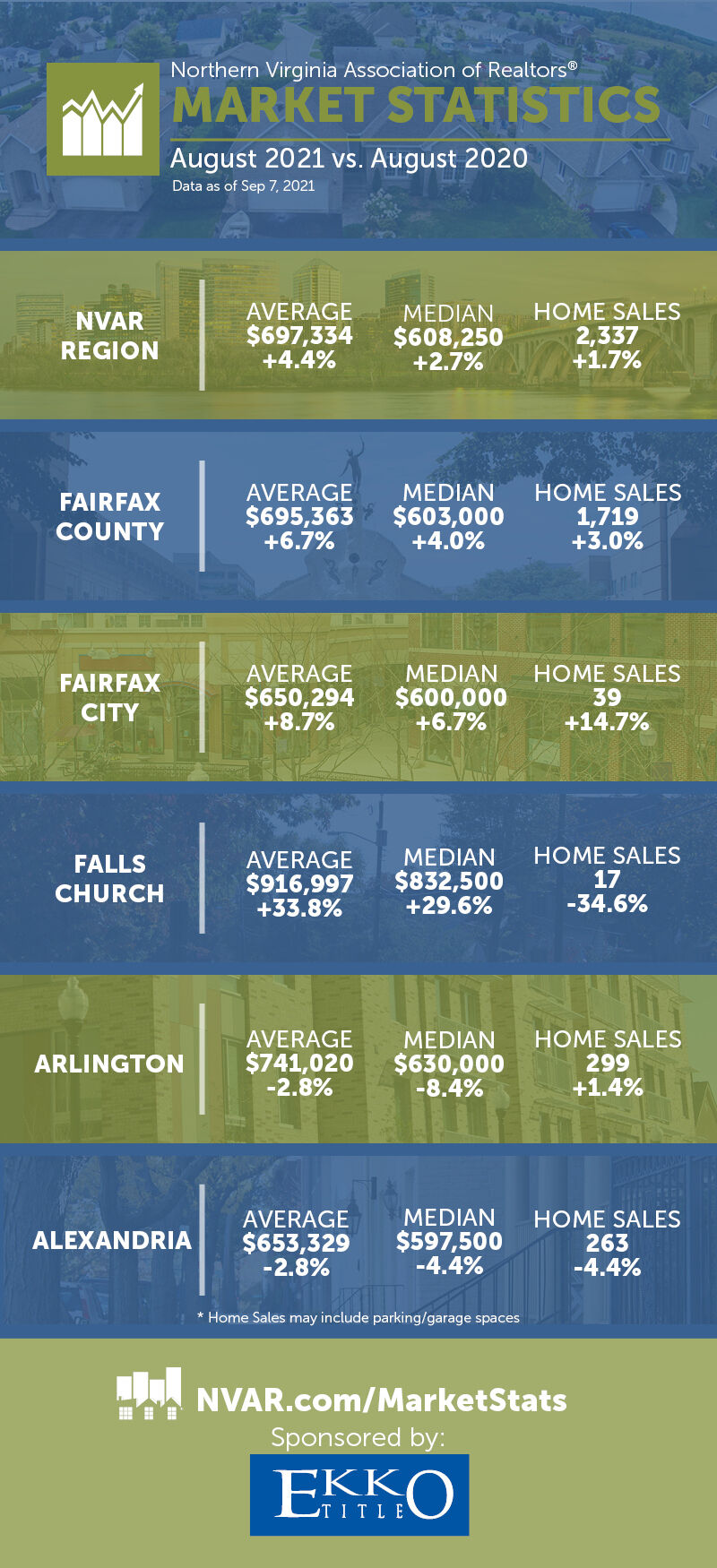
The D.C. region’s red-hot housing market has begun to show signs of fatigue, and in Northern Virginia the market softened in August, according to the Northern Virginia Association of Realtors.
“Overall we’ve definitely seen a softening in the market which is reflected in a decrease in multiple offers and biding wars,” said Northern Virginia Association of Realtors President-elect Reggie Copeland.
“That has been somewhat of a challenge for sellers that didn’t make it on the market until June, July or August because in many areas buyers had started backing off and delaying purchasing based on the previously high real estate temperature.”
Copeland said an increase in the time it takes to get a contract from a buyer has also caused some sellers to lower their prices.
The average number of days on the market for a home for sale in Northern Virginia in August was 18 days, 20% longer than it took to sign with a buyer in July.
The average price of what sold in Northern Virginia in August was $608,250, a 5% drop from July, though still 2.7% higher than August of last year.
The Northern Virginia Association of Realtors said signs point to a return to a more balanced market, noting pending sales, or contracts signed to buy a home in August, fell 13.3% from July’s level.
The Northern Virginia Association of Realtors represents Fairfax and Arlington Counties, the cities of Alexandria, Fairfax and Falls Church and the towns of Vienna, Herndon and Clifton.