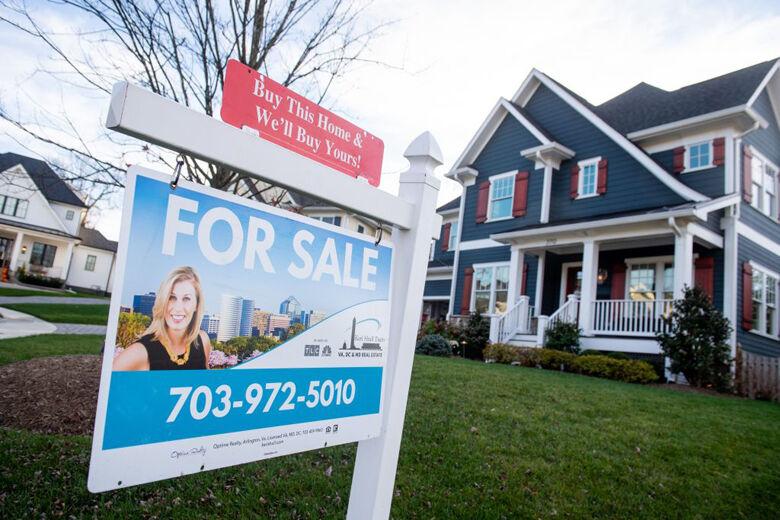
When it comes to housing prices and sales, red-hot Arlington County cooled a bit last month compared to last summer — a modest slowdown that the Northern Virginia Association of Realtors says was typical throughout the region.
NVAR reports the median price of a home that sold in Arlington County last month was 9% lower than a year ago, and the average number of days on the market, or how long it took to sell a home, was up 35% compared to last July.
The number of new listings in Arlington County also fell 19% from a year ago.
Throughout the NVAR region, which includes Fairfax and Arlington counties, the cities of Alexandria, Fairfax and Falls Church, and the towns of Vienna, Herndon and Clifton, the average sale price of about $724,000 was up 4% from a year ago. However, the average sale price in June was 15% higher than a year earlier.
“We began experiencing this moderation in activity ever since the July Fourth weekend,” said NVAR President Derrick Swaak. “At this point, it is unclear whether it is the result of both buyers and sellers taking a break and going on some much-needed vacation, or if the market change is more permanent and will continue into the fall.”
There are also more properties on the market in Northern Virginia. Total active listings are 14.6% higher than a year ago. A forward-looking gauge also shows moderating buyer demand in Northern Virginia.
Listing service Bright MLS has an algorithm which factors in showing requests and online listing searches by potential buyers. For the first time since March, the demand level moved from “high” to “moderate.”