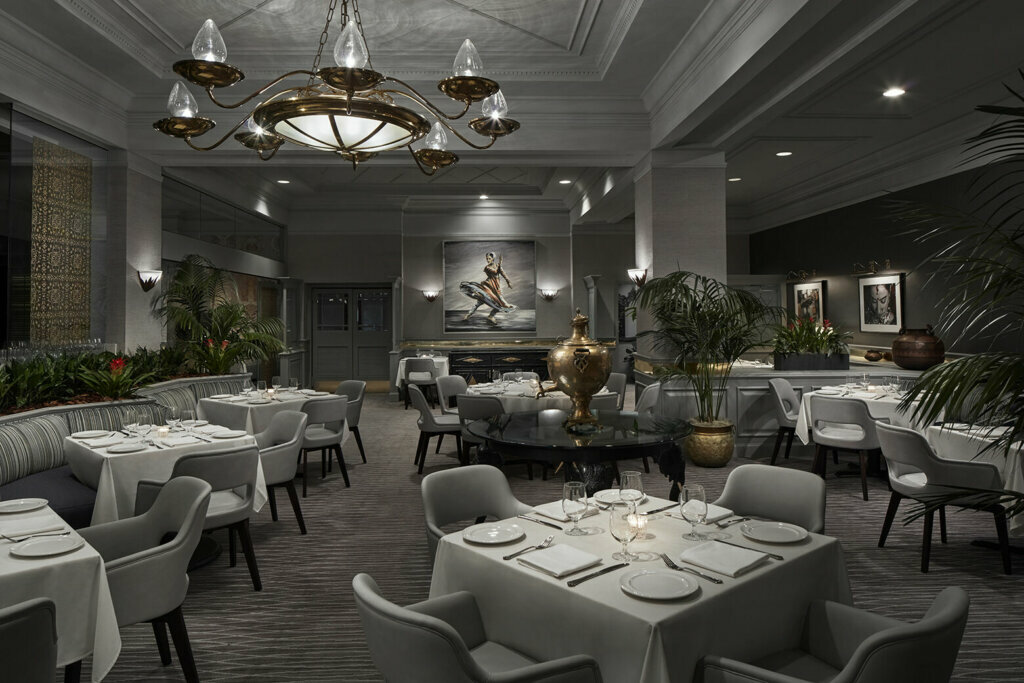
After an extensive monthlong renovation, power lunch and dinner restaurant The Bombay Club reopened this week.
Restaurateur Ashok Bajaj opened The Bombay Club in 1988, a half block from the White House at 815 Connecticut Ave. NW, as D.C.’s first fine dining Indian restaurant. It has served presidents and celebrities for over three decades.
The restaurant closed July 4 for renovations to both the front and back of the restaurant, including an all-new look for the bar, private dining room and main dining room as well as an all new kitchen. Some features from the previous incarnation of The Bombay Club remain, including a handmade brass chandelier that was imported from India, and the grand piano in the main dining room.
“Live music is one tradition that our diners would not want to lose,” said Bajaj.
The menu of authentic Indian food remains, along with new items chef Nilesh Singhvi says showcase gourmet cuisine highlighting the diversity of India’s regional dishes.
The Sunday brunch also remains.
One of Bajaj’s other power restaurants, The Oval Room, closed last November after more than 25 years, and reopened this spring as a new restaurant in the same space at 800 Connecticut Ave. NW. La Bise is an upscale French restaurant.
Bajaj’s Knightsbridge Restaurant Group operates a half-dozen restaurants in D.C., including two locations of the modern Indian cuisine restaurant Rasika; the Israeli cuisine restaurant Sababa; and, opening this fall, the Indian street food restaurant Bindaas Bowls and Rolls in Penn Quarter.