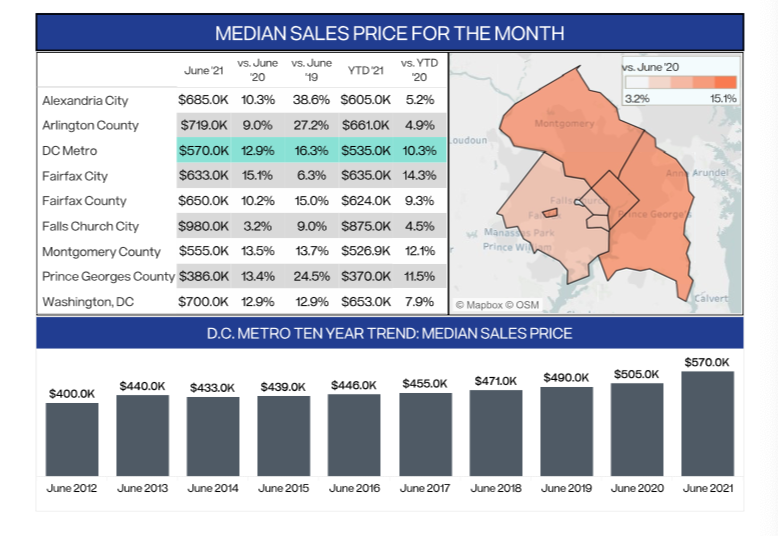
The median price of a home that sold in June in the D.C. metro area was $570,000, matching the record high set in May, but there are signs that sales are slowing.
Listing service Bright MLS reports pending sales in June, or contracts signed to buy but sales not yet closed, were down 6.5% from May. Pending sales are a better gauge of the current market than closed sales, which represent purchases made one or two months prior. Closed sales were up 13.2% from May.
Homes that listed in June sold in an average of seven days, an incredibly fast pace, but that was one day longer than the average six days in May.
Potential buyers have more to look at in the D.C. area market. Bright MLS reports new listings rose 6.9% last month, and new listings were up 33.2% from a year earlier.
Bright MLS’s Home Demand Index, which tracks presale activities including home showing requests, home searches and views within Bright MLS’s own listings, still ranks demand in the D.C. area near the highest end of the scale, though it fell for the consecutive month in June. It said demand eased due to rising prices and lean inventory.
Still, year to date D.C. metro sales volume is 35% ahead of 2020 and 27% higher than 2019. June sales hit a new 10-year overall record, up 13.2% from May and up 23% from the five-year norm for the month of June.
Below is a chart showing monthly sales trends by jurisdiction in the D.C. metro area for June. Data provided by MarketStats by ShowingTime based on listing activity from Bright MLS: