
2026-07-15 22:10:28 WHINO, half restaurant, half art gallery, opens at Ballston Quarter – NEW WTOP Skip to main content

WHINO, half restaurant, half art gallery, opens at Ballston Quarter

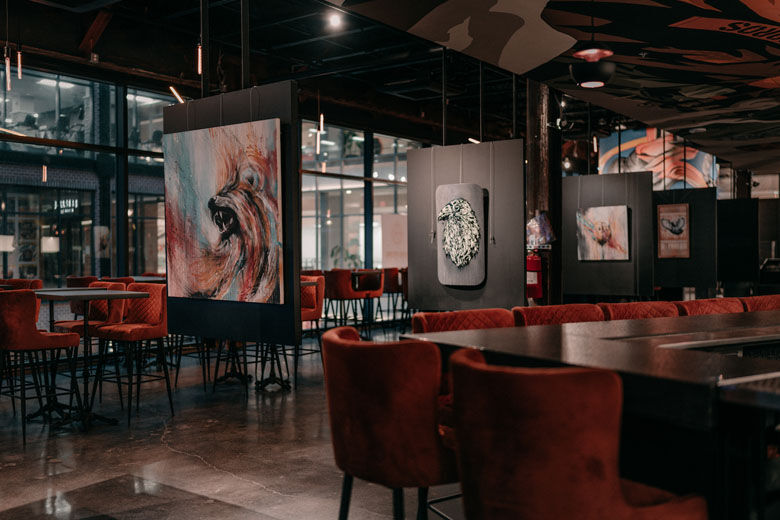
The 6,200-square-foot WHINO restaurant is big, with six different seating areas including a 25-seat open kitchen bar, a 51-foot long cocktail bar and an 11-seat tasting bar. (Courtesy WHINO)

The latest addition to Arlington’s Ballston Quarter is WHINO, a combination restaurant and art gallery on Ballston Quarter’s second level.

The restaurant’s owner and avid art collector Shane Pomajambo operated Art Whino, a pop-art gallery at National Harbor for nearly 10 years. It closed in 2017 when Pomajambo began planning for WHINO restaurant.

Chef Eleftherios Natas, whose resume includes El Centro and Graffiato in D.C., is in charge of the menu and kitchen at WHINO. The menu includes small and shareable plates such as smoked octopus, ricotta gnocchi and day boat scallops.

The 6,200-square-foot restaurant is big, with six different seating areas including a 25-seat open kitchen bar, a 51-foot-long cocktail bar and an 11-seat tasting bar.

The art, which will rotate monthly, includes large murals and much of it is pop art and pop surrealism.

WHINO will host regular art shows, many of which will showcase new artists, and the gallery will also have sculptures and collectables for sale.

WHINO is open Monday through Wednesday from 3 p.m. to 10 p.m., Thursday and Friday from 3 p.m. to 2 a.m., Saturday from 11 a.m. to 2 a.m. and Sunday from 11 a.m. to 10 p.m.

Ballston Quarter also has a 25,000-square-foot indoor-outdoor Quarter Market with more than a dozen food vendors, making it the largest food hall in the D.C. area.

Ballston Quarter is the 850,000-square-foot redevelopment of the former Ballston Common Mall that included a complete overhaul of the mall itself and the addition of a 22-story residential building and new office space.

Massachusetts court hears arguments in lawsuit alleging Meta designed apps to be addictive to kids

BOSTON (AP) — Massachusetts' highest court heard oral arguments Friday in the state's lawsuit arguing that Meta designed features on Facebook and Instagram to make them addictive to young users. The lawsuit, filed in 2023 by Attorney General Andrea Campbell, alleges that Meta did this to make a profit and that its actions affected hundreds of thousands of teenagers in Massachusetts who use the social media platforms. “We are making claims based only on the tools that Meta has developed because its own research shows they encourage addiction to the platform in a variety of ways,” said State Solicitor David Kravitz, adding that the state's claim has nothing to do the company's algorithms or failure to moderate content. Meta said Friday that it strongly disagrees with the allegations and is “confident the evidence will show our longstanding commitment to supporting young people.” Its attorney, Mark Mosier, argued in court that the lawsuit “would impose liabilities for performing traditional publishing functions” and that its actions are protected by the First Amendment.
Read Next Story