Recent bouts of warmer weather are leading to a pollen spike, and that means allergies. But allergies share some symptoms with COVID-19, and a D.C. doctor has advice on what people vaccinated against the coronavirus need to look for.
“If you’ve been in a high-risk situation, and something in the back of your head is saying ‘I should get tested,’ I would go ahead and do it,” said Dr. Maria Elena Ruiz, an infectious diseases specialist at MedStar Washington Hospital Center.
“Certainly someone could have seasonal allergies and have had an exposure and maybe a breakthrough, through the vaccine — although that would be rare,” she said.
Ruiz said people should consider getting tested for COVID-19 if symptoms are lasting longer, getting worse or not getting better with their typical allergy medications.
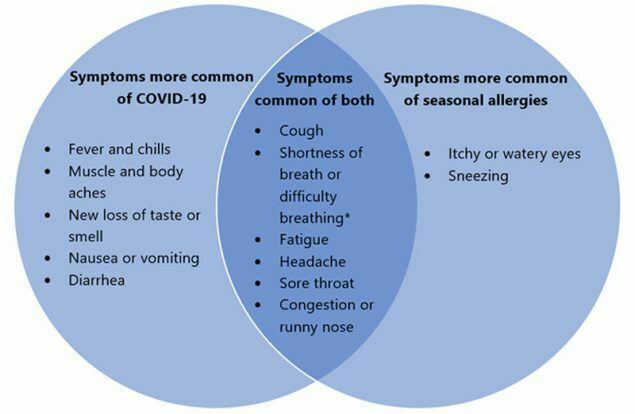
With COVID-19, you can expect fevers and chills, muscle aches, loss of smell and taste; some people have gastrointestinal symptoms such as diarrhea, Ruiz said.
“Allergies usually is more itchy, red eyes or sneezing.”
As pandemic restrictions loosen, masks aren’t required everywhere, but they might be a good idea when pollen counts are high.
“People with allergies may benefit from still wearing a mask,” Ruiz said, while noting that eyes still would be vulnerable to pollen exposure.
She recommends allergy sufferers change clothes and bathe when returning from outside, and to be proactive about beginning to take preventive medications.
- Sign up for WTOP alerts
- Latest coronavirus test results in DC, Maryland and Virginia
- Coronavirus vaccine FAQ: What you need to know
- Latest vaccination numbers in DC, Maryland and Virginia
Looking for more information? D.C., Maryland and Virginia are each releasing more data every day. Visit their official sites here: Virginia | Maryland | D.C.