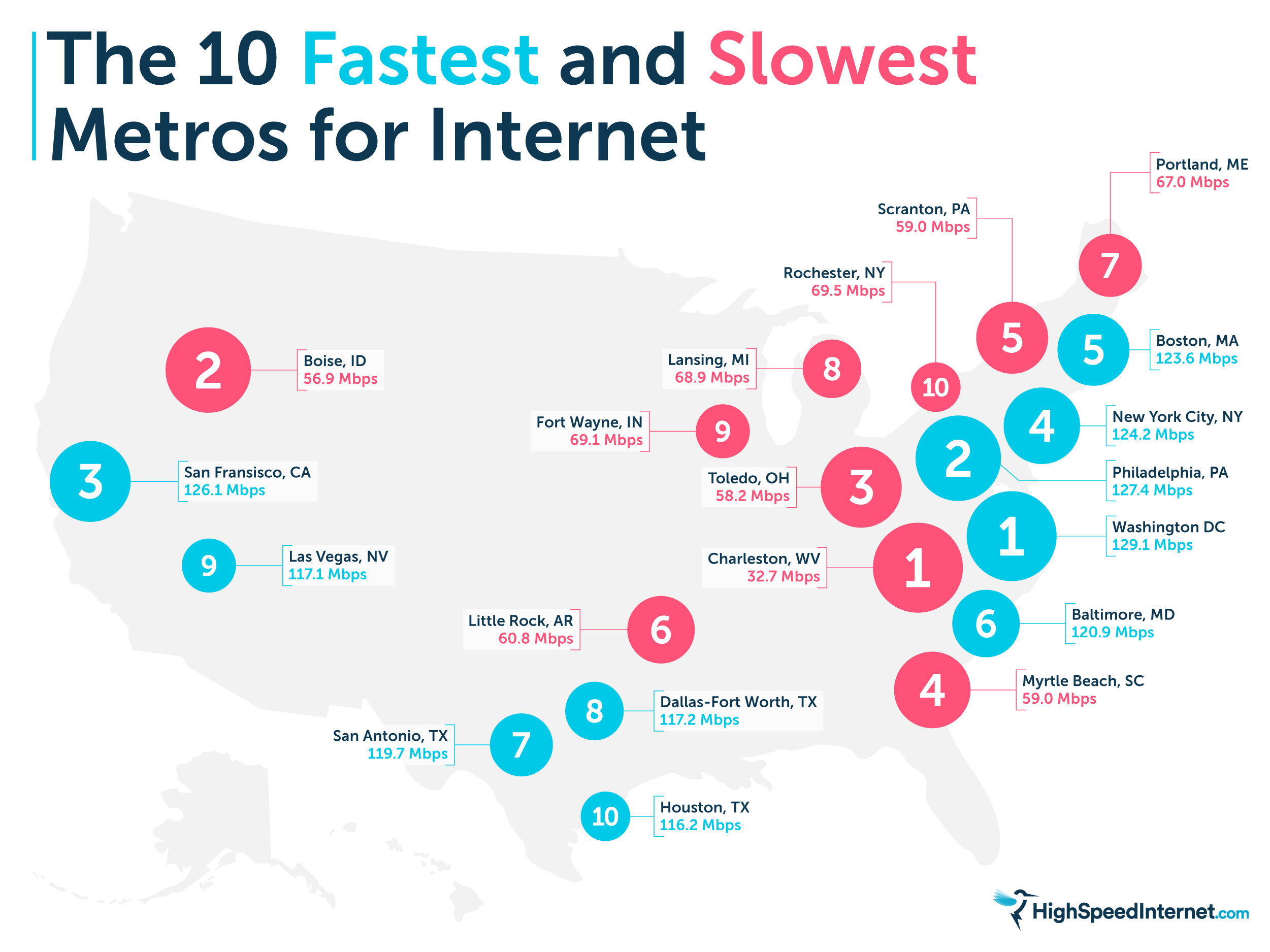
HighSpeedInternet.com, which tests and reviews broadband service providers, recently conducted more than 1.7 million speed tests in the 100 largest American metro areas, and the D.C. area ranked first for fastest average speed.
The average download speed in the D.C. area clocked in at 129.1 megabits per second.
The region’s status as the data center capital of North America means there are very robust fiber networks here, but aside from that, HighSpeedInternet.com says the fastest download speeds tend to be in cities on the East Coast.
“You’ll find that these areas are more tightly urbanized, and they have bigger populations that are more densely populated. That is a better return on investment for fiber companies installing infrastructure, because the technology was probably embraced earlier, and because they’ve been implemented at a larger scale,” said HighSpeedInternet.com researcher Tim Tincher.
San Francisco and Las Vegas were the only Western cities to make the top 10, at third and ninth, respectively.
The slowest average download speed among the 100 metros tested is Charleston, West Virginia, at 32.7 megabits per second. But even that is not too slow.
“The FCC defines broadband as 25 megabits per second, which is probably good for somebody who is living alone or one or two people who are at home browsing. But if you have a whole family working and streaming, that’s when you start to notice, ‘Oh, we don’t have a fast enough Internet speed,'” Tincher said.
HighSpeedInternet.com conducted its speed tests between Feb. 1 and March 16, and filtered out incomplete, duplicate and cellphone data. Below is a map of the 10 fastest and slowest average Internet speed metros: