The D.C. area ranks 22nd worst in the U.S. for ozone, according to the American Lung Association’s 2021 “State of the Air” report.
What the report lists as “Washington-Baltimore-Arlington” includes nearly 10 million people in D.C. and in 40 counties and independent cities in Maryland, Virginia, West Virginia and a portion of Pennsylvania.
“There has been a slight improvement for ozone, just a slight improvement,” said Aleks Casper, American Lung Association director of advocacy for D.C. “It is still among the top 25 worst cities for ozone. So, it’s something to absolutely be aware of and we have to continue to work on.”
Ozone is known as smog. Particle pollution, known as soot, can cause lung cancer.
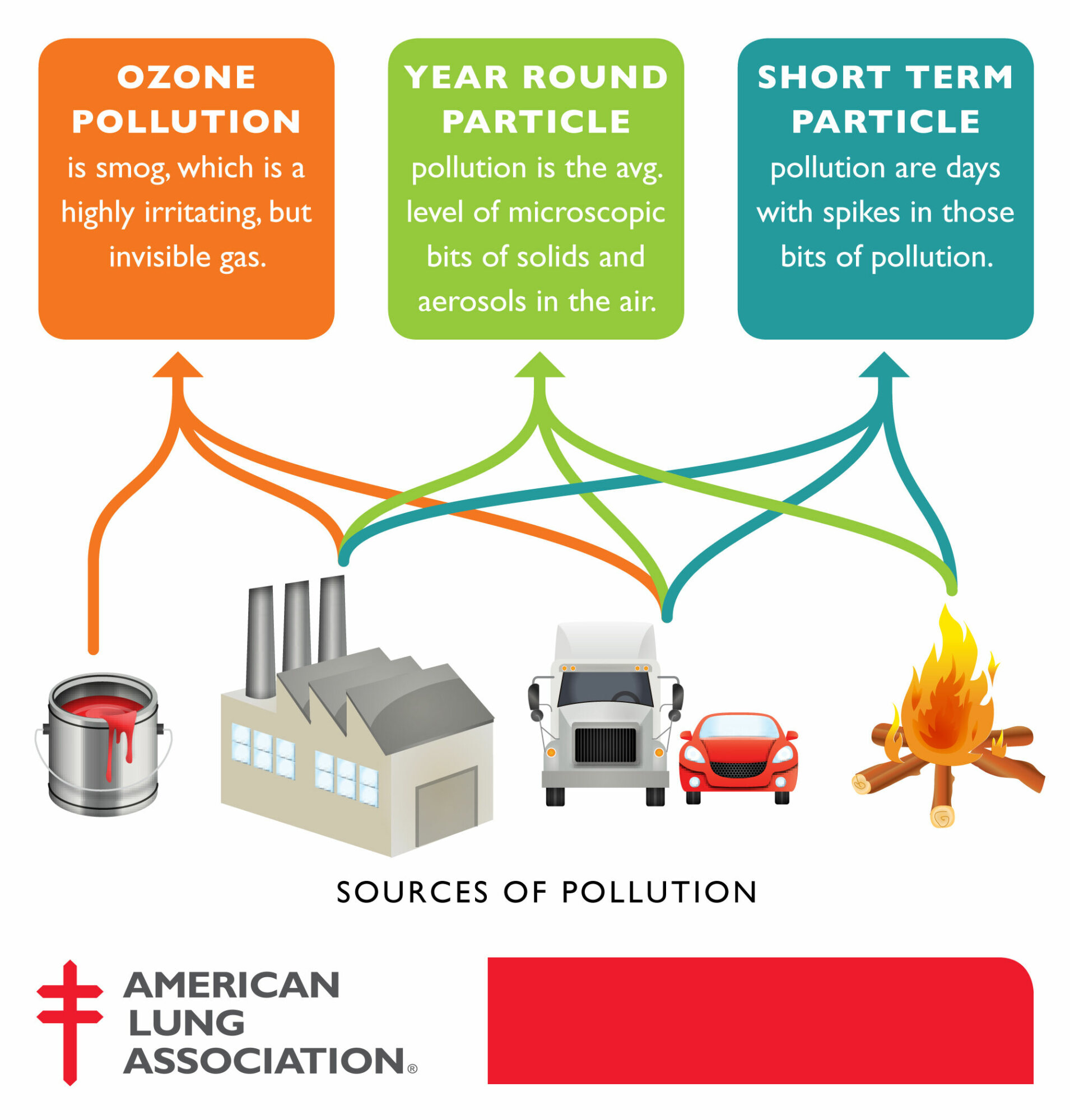
The D.C. area has done worse on “most polluted for year-round particle pollution” and remained unchanged for “short term particle pollution” in this year’s evaluation. Casper finds that really concerning.
The report shows some progress on cleaning up air pollution nationally, but there’s still room for improvement.
“Forty percent of Americans are living in and breathing unhealthy air,” Casper said. “Particle pollution and ozone can really damage your health.”
The American Lung Association believes that even breathing one day of unhealthy air can cause people harm.
Ozone pollution is particularly dangerous for children, older adults and people with lung diseases, such as chronic obstructive pulmonary disease or asthma.
“Although we’re aware of many of the risks of bad air, ozone and pollution to patients with emphysema, asthma and lung cancers, we also have to remember it affects people in many different ways,” said Dr. Amit K. Mahajan, an American Lung Association volunteer medical expert.
Some of those different ways include: having increased susceptibility to infections, having potential for impaired cognitive functioning and the risk of metabolic disorders and even premature birth.
Known as “Dr. Bobby,” Mahajan is medical director of Interventional Pulmonology and Complex Airways Disease Program at Inova Medical Group, which serves Northern Virginia and the D.C. area.
“As a team and a world, we need to work on trying to develop means to reducing ozone and pollution, not only to help our children but also to help our development in the future,” Mahajan said.
Casper said anything people can do on a personal level can help. She recommends using public transportation or a zero emission vehicle to cut back on the ozone. Not burning wood fires on hot days will prevent someone from adding to the soot, particle pollution problem.