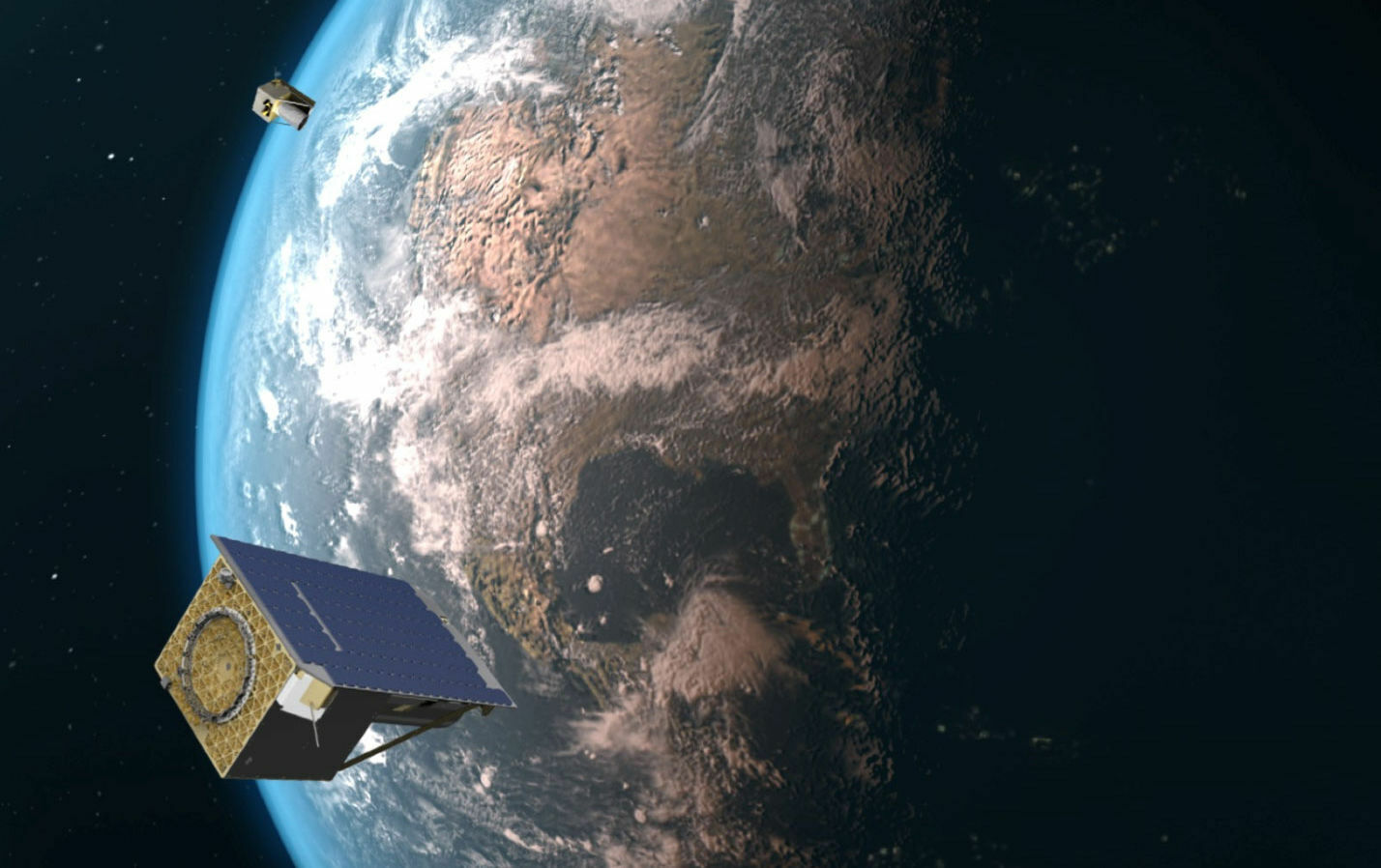
Herndon, Virginia-based BlackSky, a space startup whose small imaging satellites collect high-resolution images of Earth for government and commercial customers, is accelerating the expansion of its satellite constellation.
BlackSky will add nine satellites this year through a launch partnership with Long Beach, California-based Rocket Lab, which specializes in small and cube satellite launches. The first of the nine additions was successfully launched March 22. The nine satellites will be deployed on a total of five Rocket Lab launches.
The second-generation satellites are high-revisit, high-resolution cameras that will upgrade BlackSky’s capabilities a year ahead of schedule.
BlackSky will further upgrade its satellite network in 2023 with third-generation satellites capable of capturing images of earth at night and through clouds. When complete, it will be a 30-spacecraft constellation.
BlackSky customers use the real-time geospatial imagery or everything from climate monitoring to intelligence gathering. Its small satellites can revisit a given location for imaging several times a day.
It also uses ground-based sensors and data feeds, and artificial intelligence and machine learning to provide monitoring and alert services. Its services are provided through subscriptions to customers.
BlackSky agreed in February to merge with Osprey Technology Acquisition Corp, a special purpose acquisition company, which will make it a publicly traded company, and will trade on the New York Stock Exchange under the ticker symbol “BKSY.”