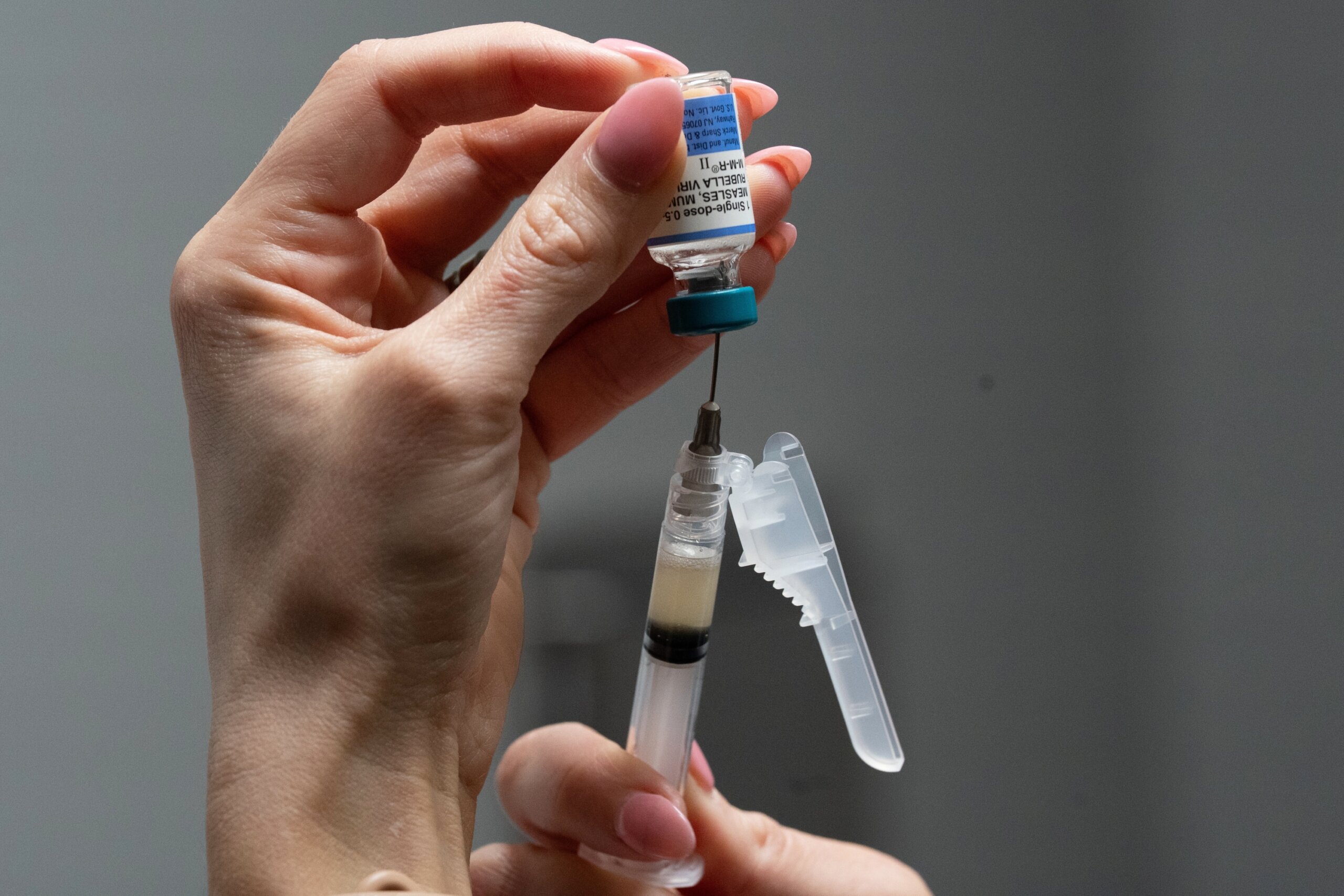
When people get vaccinated against any ailment, including COVID-19, the body’s immune response can cause lymph nodes to swell, and that might show up when women get mammograms — but experts don’t want that to interrupt appointments for either procedure.
“Right now, different large institutions are making different decisions about this, and the Society of Breast Imaging came out with some helpful suggestions,” said Dr. Clayton Taylor, a breast imaging radiologist at The Ohio State University Comprehensive Cancer Center — Arthur G. James Cancer Hospital and Richard J. Solove Research Institute.
In cases where someone is going for a routine yearly screening, some institutions recommend separation between vaccination and breast screenings to avoid potentially unnecessary follow-up appointments to evaluate questionable findings.
“That those women delay their mammogram either four to six weeks after they’re all done after their second vaccine. Or, they have their mammogram before their vaccine,” Taylor said.
But, “if you are already overdue for your screening exam or cannot reschedule within the next few months, keep your screening mammogram appointment and keep your COVID-19 vaccination appointments,” the Society of Breast Imaging guidance says, noting that “both are very important to ensure that you stay healthy.”
Women should inform screeners about whether they’ve been vaccinated with a first or second dose, how long ago it was and in what arm.
With that information, Taylor said his institution is confident it can safely interpret a mammogram.
He recommends people going for routine screenings follow whatever the guidance is of the facility they visit and that people who notice something suspicious get evaluated immediately.
“If you have a breast problem, for example, a lump in your breast, it doesn’t matter if you’ve had a COVID vaccine recently or not — you should seek care from your doctor and if needed you should have the appropriate breast imaging,” Taylor said.
The pandemic has already interrupted too many preventive procedures.
“We want to try to avoid delaying or reducing breast cancer screening as much as we can,” Taylor said.