
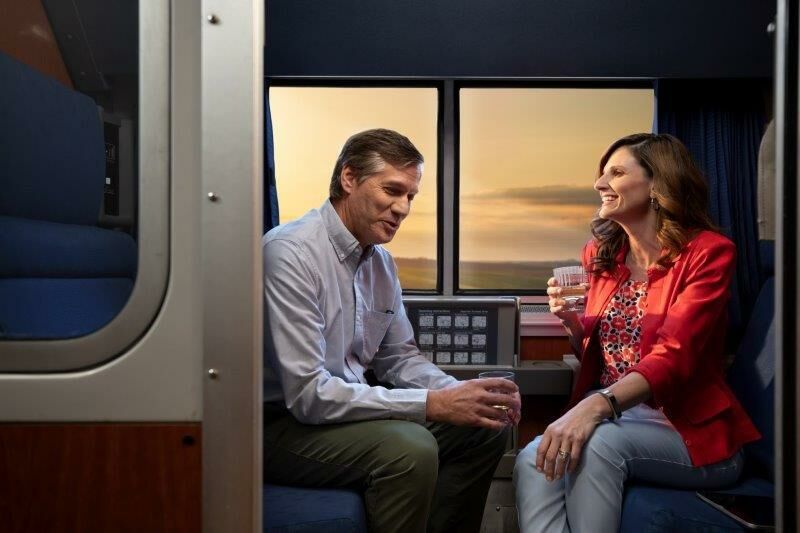
Amtrak is offering more privacy and space on some of its overnight Northeast Corridor trains from D.C. to New York and Boston.
Northeast Regional service will include a few trains with roomettes, bedrooms or accessible bedrooms starting April 5. A sample fare is $288 each way, per person from D.C. to Boston, a 10-hour trip.
Three trains are part of the schedule:
- Amtrak Train 66 leaves D.C.’s Union Station every day at 10 p.m. and arrives at New York’s Penn Station at 1:55 a.m. and Boston South Station at 7:58 a.m.
- Amtrak Train 67 travels Sundays through Thursdays, leaving Boston at 9:30 p.m. and arriving at Union Station at 7 a.m.
- Amtrak Train 65 runs at slightly different arrivals times on Fridays and Saturdays.
Private rooms all have seating that folds into a bed, as well as bedding, towels and linens. Private rooms have a dedicated attendant with turn down service. A roomette is the smallest private room. A bedroom is twice the size and includes a private shower.
All private room passengers receive complimentary access to the Metropolitan lounge in D.C. and Boston, as well as a free alcoholic drink when boarding and a free continental breakfast the following morning.
Travelers also can combine adjoining rooms for suites. There are a limited number of family bedrooms that are the width of the car and include four convertible beds for two adults and two children. Wheelchair-accessible bedrooms are available as well.
Amtrak ridership is still down about 75% from pre-pandemic levels.
Here’s a short video of a bedroom from Amtrak: