
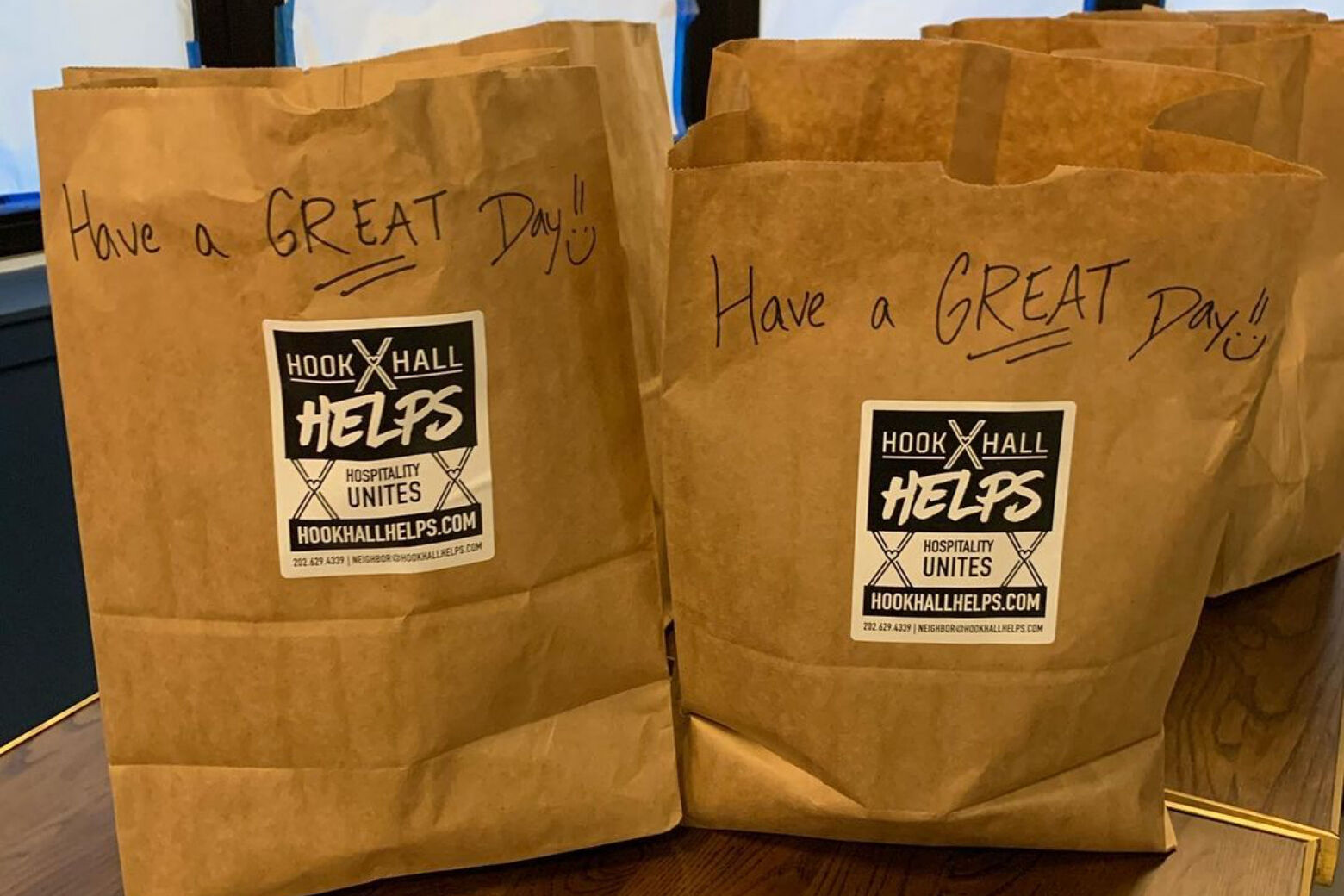
Hook Hall Helps, a partnership between D.C. beer hall and events space Hook Hall and the Restaurant Association of Metropolitan Washington that has been feeding struggling restaurant workers, has received a $130,000 donation from Planters Peanuts, through its mascot Mr. Peanut, as part of its #ANutAbove campaign.
Parent company Kraft Heinz, which is forgoing Super Bowl advertising for Mr. Peanut this year, is instead using the $5 million Super Bowl budget “to recognize and reward little acts of extraordinary substance across the country.”
Hook Hall Helps is the first recipient.
Planters will give away $1 million to locally owned bars across the country that are going above and beyond for their neighbors. It will give $50,000 to a total of 20 bars, and make its choices based on nominations made on Twitter.
Hook Hall Helps was launched in March 2020 by Hook Hall owner Anna Valero. Last year it raised more than $600,000 and provided more than 10,000 free meals to struggling hospitality workers. It recently expanded its program to Northern Virginia.
“At the beginning of the initiative, a lot of people told us we were nuts. I guess today Mr. Peanut confirmed it’s true,” Valero said.
Hook Hall Helps uses donations to pay restaurants to prepare the meals. The restaurants, in turn, are able to pay their employees for the additional work. Restaurants can sign up online to provide meals for Hook Hall Helps.