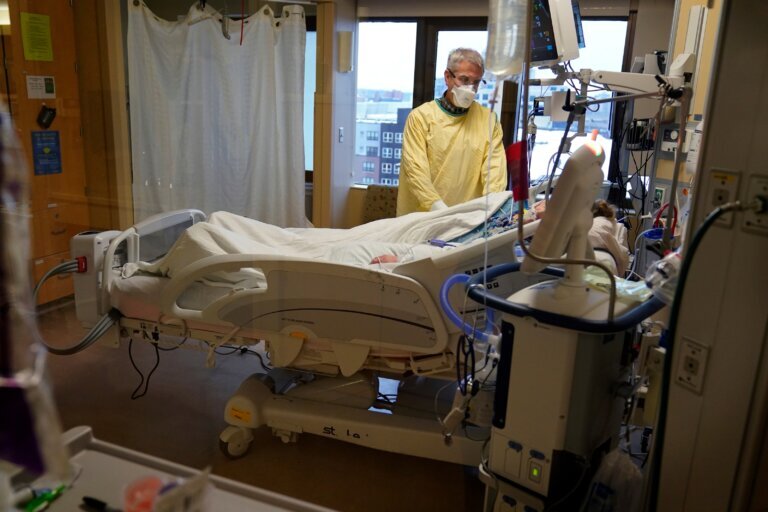
If the trend of new all-time high numbers of daily COVID-19 deaths in the U.S. continues, the virus could claim 400,000 lives by the end of January, according to an expert at the Johns Hopkins Bloomberg School of Public Health.
“More than 4,085 Americans died from the coronavirus yesterday, and that’s the highest number we’ve seen on a single day,” said Jennifer Nuzzo, senior scholar at the Johns Hopkins Center for Health Security at the Bloomberg School of Public Health.
Nuzzo said overall numbers are being driven by recent record-high days for daily deaths in 13 U.S. states, and the anticipated winter holiday surge could still be more than a month away.
“What we keep seeing is that, often, the surges happen a bit silently at first,” Nuzzo said.
Holiday travelers may be healthier and less likely to develop severe symptoms before spreading the virus. The surge begins to become more obvious when people get sick enough to get tested or require specialized care.
“We start seeing changes in hospitalizations, etc. So, I give it (the holiday surge) a fairly long runway — probably at least a month, and it will continue past there, past that time,” Nuzzo said.

- Sign up for WTOP alerts
- Latest coronavirus test results in DC, Maryland and Virginia
- Coronavirus vaccine FAQ: What you need to know
- With virus surging, Biden to speed release of COVID vaccines
- U.S. tops 4,000 daily deaths from coronavirus for 1st time
- COVID-19 vaccine distribution ramps up in Howard, Frederick counties
- Sense of smell could take time to return for some COVID-19 patients
Looking for more information? D.C., Maryland and Virginia are each releasing more data every day. Visit their official sites here: Virginia | Maryland | D.C.