
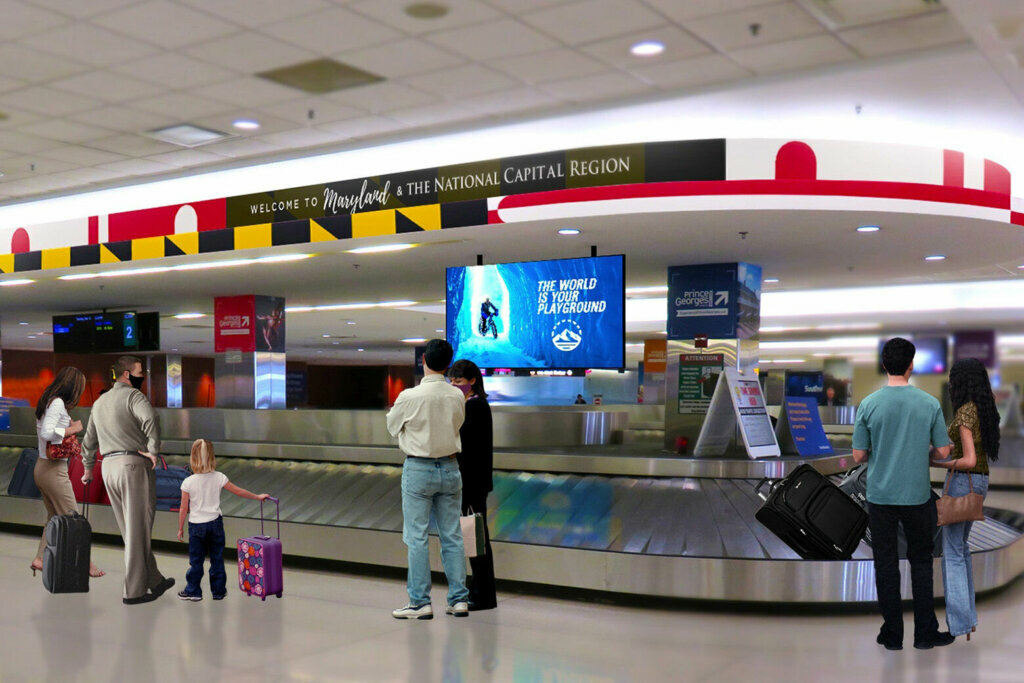
BWI Marshall has awarded a contract to Clear Channel Airports, a division of New York-based Clear Channel Outdoor Holdings, for new digital advertising and signage programs to reach travelers at the airport.
The 10-year contract was approved by the Maryland Board of Public Works earlier this year. It is a revenue producing contract for the airport, though the revenue it creates under the revenue-sharing contract will depend on advertising sales.
Clear Channel Airports’ work at BWI is now underway, with most upgrades expected to be implemented by spring 2021.
It will provide a terminal-wide advertising network and multiple passenger engagement features.
“With this initiative, regional brands will have the opportunity to stand out and reach passengers in our world-class airport environment,” says BWI executive director Ricky Smith.
It will include overhead digital displays in high-traffic areas of the airport’s concourses, flight information monitors and a digital baggage claim network, digital projections and an LED network for the airport’s rental car shuttle buses.
Clear Channel Airports recently partnered with nonprofit Geopath for technology that can measure audience impressions. It currently has a presence in 28 of the top 50 U.S. markets with major airports.
While passenger counts at airports are still considerably below pre-pandemic levels, the number of potential eyes those digital ads will be able to reach at BWI is climbing.
In July, the most recent data available, BWI Marshall ranked as the 11th-busiest domestic U.S. airport by passenger traffic, well ahead of its usual ranking, even though its July passenger count was down 64% from a year earlier.
BWI Marshall accounted for 51% of passenger traffic at the Washington region’s three commercial airports in July, and for the second straight month, it totaled more than Reagan National and Dulles International combined.