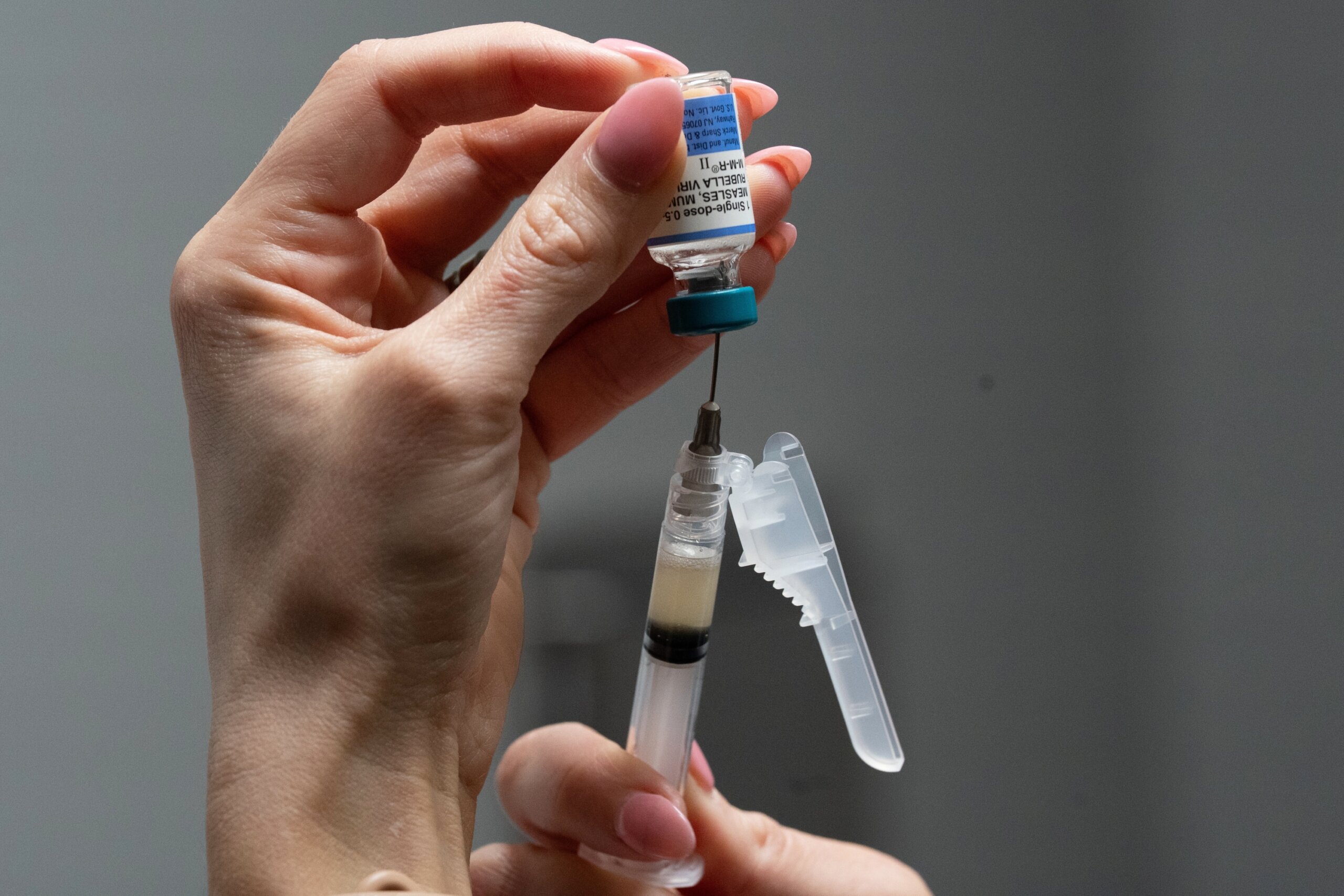
As flu shots become available in coming weeks, doctors want you to know it has never been more important to get vaccinated.
In the fall, doctors and health care systems will be dealing with two circulating viruses: influenza and the novel coronavirus.
“There has never been a more important time in history to get your flu shot than now,” Dr. Sunil Budhrani said.
Budhrani is CEO and Chief Medical Officer of Innovation Health, a joint venture partnership of Aetna and Inova Health System.
“By getting the flu shot, you’re effectively going to help us take one problem off the table,” Budhrani said.
The need to get everyone vaccinated against flu is so great, manufacturers have boosted this year’s production of flu vaccine almost 25% to 40% to help ensure availability.
“To put things in perspective, last year we had 150-175 million doses of flu vaccine prepared. This year, we’re looking at anywhere of between 200-220 million vaccine opportunities for the flu,” he said.
Based on influenza strains that circulated last year, manufacturers have been producing vaccine since February.
To counter concern that some parents may choose not to have children vaccinated against either the flu or COVID-19, if a vaccine becomes available, Budhrani said vaccines are safe and go through a rigorous safety process.
“Children are exposed to almost 2,000 to 6,000 different antigens their bodies make antibodies to every year,” Budhrani said. “If you put that in perspective and give a vaccination like a flu shot and ultimately a coronavirus vaccine — when it’s made available to protect your health and others — will be incredibly critical and with a very, very impressive safety profile as things go through our process.”
Budhrani wants to emphasize that the flu vaccine does not give you the influenza virus. As your body’s immune system revs up to create protective antibodies, you might feel a little feverish or weak, and your arm might ache where you get the shot, which are normal physiological responses.
“And, the overwhelming benefit to yourself and others greatly, greatly outweighs the risk of any soreness at the muscle site from getting the vaccine,” Budhrani said.
After getting a flu shot, it takes two to four weeks for your body to develop immunity.
- Sign up for WTOP alerts
- Latest coronavirus test results in DC, Maryland and Virginia
- Coronavirus FAQ: What you need to know
- Coronavirus resources: Get and give help in DC, Maryland and Virginia
- Fall school plans for DC, Maryland, Virginia systems during coronavirus
- Montgomery County schools will stop offering free meals to all students
- Delaware leaders push back on high-risk status after DC Health cites data ‘anomaly’
- Loudoun Co. man pleads guilty in $1M coronavirus loan fraud scheme
Looking for more information? D.C., Maryland and Virginia are each releasing more data every day. Visit their official sites here: Virginia | Maryland | D.C.