
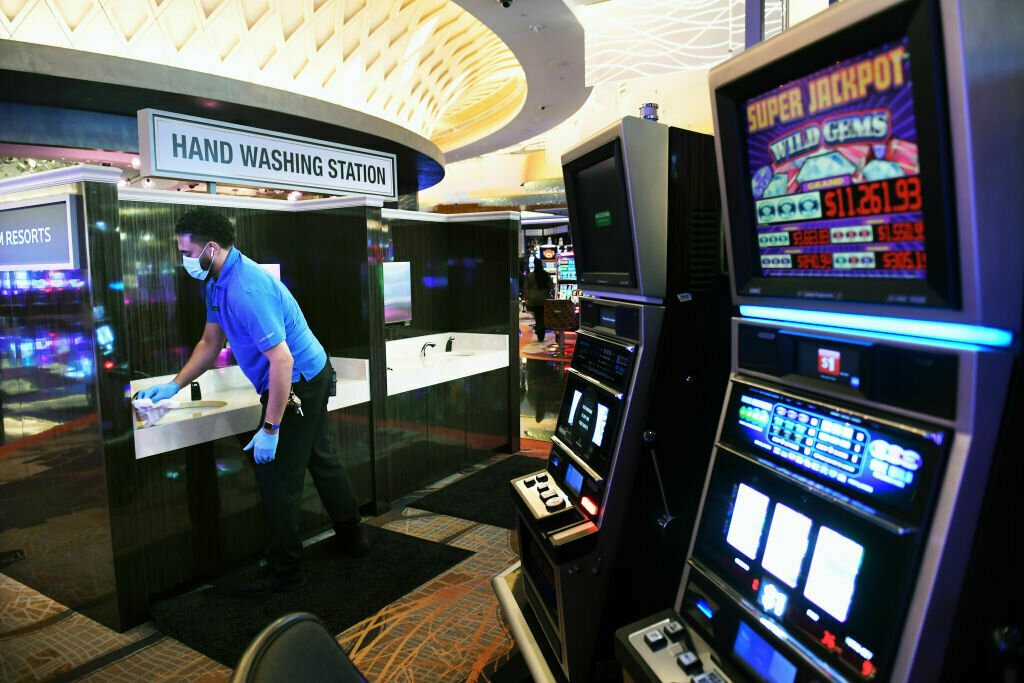
July was the first full month of openings at Maryland’s six casinos, and even with the number of gamblers limited to 50% of capacity, three of the state’s six casinos logged higher gaming revenue than a year ago.
Overall, total casino revenue was down just 6.3% from last July.
Maryland’s six casinos generated a combined $139.9 million in July, down $9.4 million from July of last year.
But at Live! Casino & Hotel, July gaming revenue totaled $51.5 million, up 4.5% from a year ago. That’s also under $1 million less than what MGM National Harbor, the state’s largest casino, generated.
July gaming revenue was also higher than last July at Hollywood Casino and Rocky Gap Casino.
MGM National Harbor had $52.3 million in July gaming revenue, down 13.9% from a year ago.
At Baltimore’s Horseshoe Casino, July gaming revenue totaled $15.8 million, down 18.5%.
“With limited entertainment options, people have been anxious to get out and do something fun,” said Maryland Lottery and Gaming director Gordon Medenica.
“The casinos worked very hard to reconfigure their operations for this ‘new normal’ and while this is still uncharted territory in many ways, these are strong results, given the circumstances.”
MGM and Live! both reopened to the general public June 29, after closing temporarily on March 16.
The state’s share of gaming revenue was nothing during the months of April and May as a result.
In July, Maryland’s take was $57.9 million, including $43.5 million for the Education Trust Fund, down 6.1% from a year ago.
Maryland Lottery and Gaming posts monthly and year-to-date casino gaming revenue online.