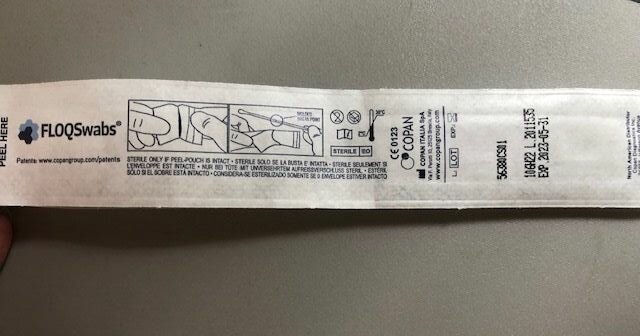
Do-it-yourself COVID-19 tests are becoming more common, and they don’t involve shoving a probe into the back of your throat through your nose: You simply swirl a swab around in the lower portion of your nasal passage.
The bad news is, you can’t do the COVID-19 testing yourself at home. After some companies began producing at-home testing kits, the FDA revised its Emergency Use Authorization guidelines, and they’re no longer allowed.
The good news is, you can perform the test at a growing number of pharmacies. Doing your own COVID-19 test through a local pharmacy involves pulling up to a drive-thru window where a helper behind glass walks you through the process.
After you swirl a swab around in the bottom of your nose, you put the sample in a vial, seal everything up, put the kit in a drop box and drive away.
That procedure is available now at dozens of CVS pharmacies in the metropolitan D.C. area.
Of Walmart’s 16 COVID-19 testing sites serving communities in Maryland and Virginia, five are in the D.C. region. More could be coming soon.
But do they work? That’s the other good news.
Multiple studies, including one conducted by the Stanford University School of Medicine, have shown no reliability problems with self-collected specimens. Researchers publishing in the New England Journal of Medicine added that patient collected samples reduce the use of personal protective equipment and help protect health care workers from potential exposure.
- Sign up for WTOP alerts
- Latest coronavirus test results in DC, Maryland and Virginia
- Coronavirus FAQ: What you need to know
- Coronavirus resources: Get and give help in DC, Maryland and Virginia
- How the pandemic might be changing people’s perceptions about bike rides
- Johns Hopkins discusses return to class in the fall
Looking for more information? D.C., Maryland and Virginia are each releasing more data every day. Visit their official sites here: Virginia | Maryland | D.C.