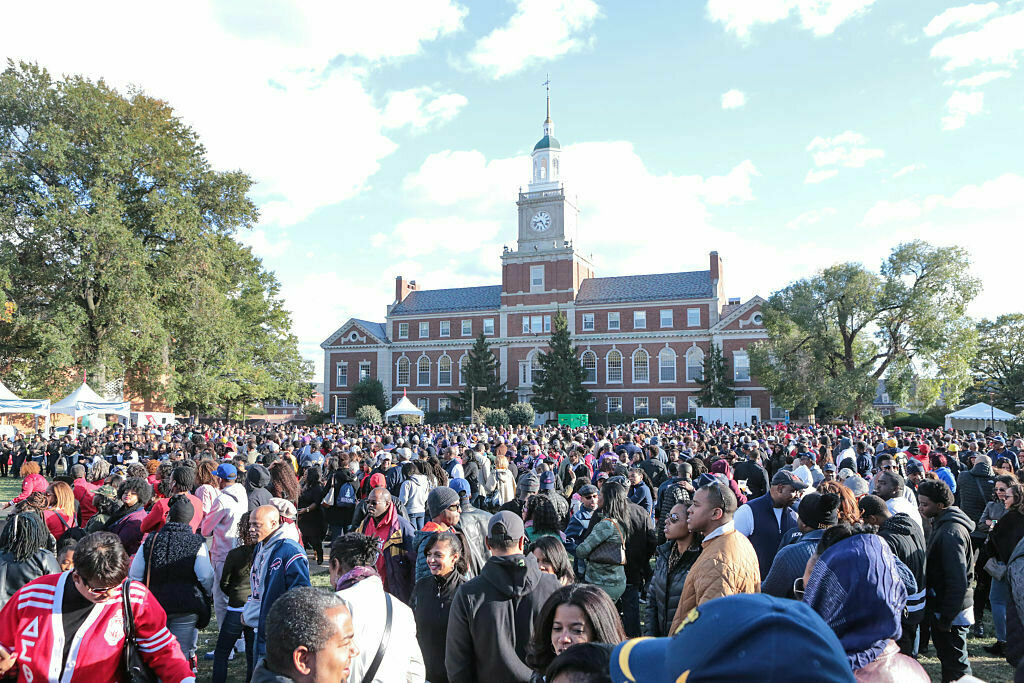
Howard University will not hold its annual homecoming celebration in person in 2020. Instead, it will be held virtually as part of the historically black university’s reopening plan for the fall.
Howard routinely draws thousands of students, alumni and visitors for the event but concerns over the coronavirus pandemic led to the move to a virtual space. President Wayne A. I. Frederick told Anna-Lysa Gayle on WHUT having homecoming on campus would put too many people at risk.
“That is not something that I think we can do safely because of the nature of it,” he said.
Howard announced in February its homecoming would be Oct. 10-18, with the homecoming football game against Delaware State played Saturday, Oct. 17.
Specific plans for the virtual celebration have not yet been announced.
Last week, Frederick said Howard, like other D.C. universities, will use a “hybrid” system of in-person and virtual learning in the fall.
Students at Howard will be required to complete a COVID-19 test within seven days before arriving on campus, and will be given personal protective equipment, such as face coverings and sanitizer. Large gatherings will continue to be prohibited.
- Sign up for WTOP alerts
- Testing, distancing and ‘hybrid’ classes being planned at D.C.-area universities
- Latest coronavirus test results in DC, Maryland and Virginia
- Coronavirus FAQ: What you need to know
- Bowser: DC Phase Two coronavirus reopening could start Monday
- Montgomery County officials detail Phase Two, announce youth jobs program
- When coronavirus restrictions loosen, what will travel be like?
- RVs, camping, one-tank trips will become popular, expert says
- Fauci says ‘we’re still in a first wave’ of coronavirus pandemic
Looking for more information? D.C., Maryland and Virginia are each releasing more data every day. Visit their official sites here: Virginia | Maryland | D.C.