
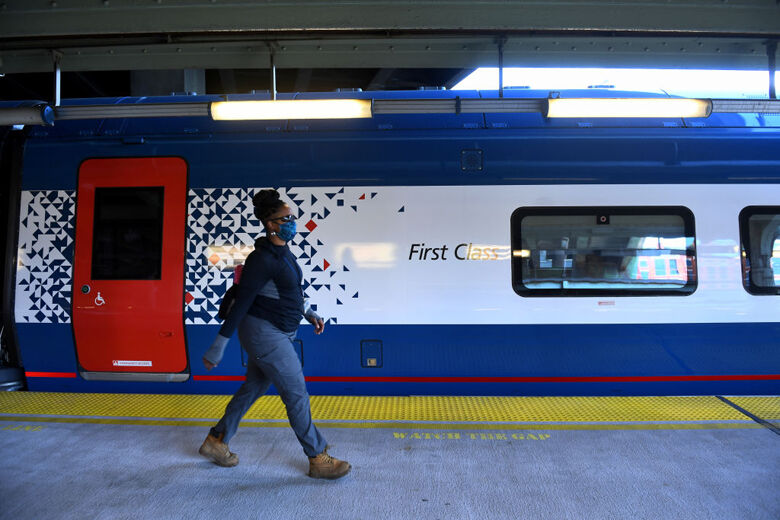
(Photo by Katherine Frey/The Washington Post via Getty Images)
Amtrak, which suspended all high-speed Acela service from D.C., New York City and Boston in late-March, resumed limited Acela service this month, citing an anticipated increase in demand, and it’s lowering fares for travel as far out as its booking site allows reservations, currently through May 2021, for tickets purchased by June 30.
The June sale also applies to regular Amtrak Northeast Regional service, which increased frequency this month.
The June sale discounts regular fares by an average of 25%.
Sample fares include Washington, D.C. to New York City or Boston on Acela for $99 each way, or $39 each way on Northeast Regional service, and D.C. to Philadelphia for $69 on Acela and $39 on Northeast Regional.
Blackout dates include the two days before Thanksgiving, Nov. 24 and Nov. 25, and the Sunday and Monday after the holiday, Nov. 29 and Nov. 30.
Acela now operates on a modified schedule of three weekday-round trips. Northeast Regional service is currently 10 weekly round trips.
Amtrak now requires passengers to wear face masks. Passengers seated alone or traveling with a companion in their own pair of seats are allowed to remove masks once seated.
Amtrak also no longer accepts cash. Instead, it accepts credit cards or contactless payments. It is limiting the number of passengers to half its normal capacity.
June fare sales are available by travel time and date on Amtrak.com.