
To view this content from @DCPoliceUnion on X, click here.
Scott Roberts of Color Of Change, an online racial justice organization, praised the passage of the legislation, saying it’s a “credit to activists, advocates, and community members in D.C. and around the country.” Mayor Muriel Bowser expressed her support for emergency legislation but, in a letter to the council after the hearing started, asked for a delay on a vote for the police reforms. “I urge the Council to allow a process where these issues can receive robust public discourse, which I believe will only help to increase community buy-in on any proposed reforms,” Bowser wrote. “I am especially concerned that the ‘Comprehensive Policing and Justice Reform Emergency Amendment Act of 2020,’ and the proposed amendments that I have been made aware of, amend laws related to issues like body-worn cameras, laws which received significant consideration and public input when they were crafted, and now would be significantly changed by emergency legislation.” Tuesday’s vote will enact the changes for 90 days, which can be extended to 225 days with a second vote, The Washington Post reported. A public hearing and another vote is needed to permanently change the law. 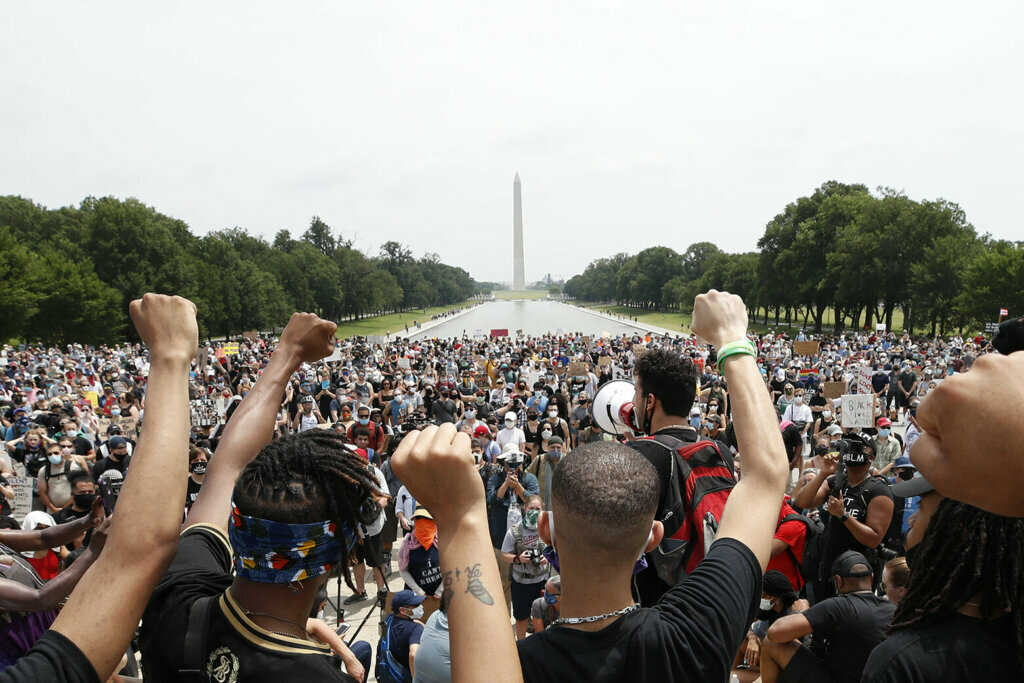
Newsham fields questions from DC Council
The police chief fielded questions from members of the council on the budget for the department and other issues on reform Tuesday afternoon. Gray, a former D.C. mayor, asked Newsham if police were trained in community policing and asked where it was in the budget that an investment has been made in that. Newsham said that one of the efforts to build trust in the community is through the department’s Community Engagement Academy. Over 250 have participated in the academy, comprising people who live in the community who want to learn about the police, and how “everything we do here is geared toward building trust, treating people with respect,” Newsham said. Newsham said that D.C. police would in “no way shape or form” be involved in the behavior seen in the officers involved in Floyd’s death. “And I attribute that to accountability. I attribute that to an accountability through body-worn cameras, through an independent Office of Police Complaints,” Newsham said. “I attribute that to hiring the right people to work for this agency, having them get a salary that will allow us to attract those folks. And then I attribute it mostly to training.” Part of police training involves a collaboration with the National Museum of African American History and Culture, and it looks at the role policing has played in racism in the U.S., Newsham said. Ward 5 Council member Kenyan McDuffie shared his experience with police when he was a teenager and asked why overpolicing happens in largely black communities in the District. Black residents in the District are disproportionately arrested for minor violations, despite making up less than half of the population, according to a study reported last year by two watchdog groups. McDuffie called for a different approach to provide public safety, and he said that increased funding for law enforcement does not equate to increased public safety. He said it is necessary to make continued and sustained investments in violence prevention programs, and he added that homicides are up by 9%. “What do you attribute that increase to?” McDuffie said. Newsham said that repeat violent offenders contribute to the overpolicing policies. “I am convinced that it’s a prevalence of guns in our community,” Newsham said. It’s activity by repeat violent offenders, and a failure of us to hold those violent offenders accountable.” At-Large Council member Robert White asked Newsham if he is open to and engaged in the idea of significant reforms to the way that the department polices. “I don’t think there’s anything in my record as your chief of police that would suggest otherwise,” Newsham said. He added that he has challenged his trainers to address the optics when police conduct necessary public safety. He gave an example of a traffic stop where three or four police cars showed up. ” … police may have been well-intentioned; they may have just been backing up a partner without considering the fact that the driver may be fearful of the police. So, that struck me that is something that we’re going to work on,” Newsham said. At-Large Council member Elissa Silverman asked about a report by D.C.’s Office of Police Complaints that shows an increase in use of force incidents by officers. Newsham said that the way the department reports use of force changed around that time period of 2015 to 2018, and he said the use of force has not dramatically increased. He said D.C. police make close to 30,000 arrests a year, and 95% of these arrests were made without any force at all. And less than 1% of the 4% when force was used included an expandable baton, stun gun or a firearm. Nadeau asked the police chief about disproportionately higher rate of African American residents being stopped and questioned based on reported data and asked what the department is doing to address this. Newsham said he wants to look at all the factors that go into police stops, traffic stops and other stops that police make. He said a significant number of stops made are based off lookouts that is received from the public, and the department has been reaching out to research groups on what police stops should look like. Nadeau also asked why it was necessary to have armed officers do work, such as going out and talking with people about opportunities and making different choices. “Why shouldn’t that be part of a more robust funding stream for social services agencies,” Nadeau said. “And what other things should we be considering for non-police work that’s currently under your purview?” “So I think that the mental health, the homelessness issue, we’re having a lot of conversations around this issue at major city chiefs,” Newsham said. “And I think that we do have to give consideration to maybe someone other than the police to be involved in that .. You know, so all of those things, these are not easy, easy answers.”
Protests on June 1
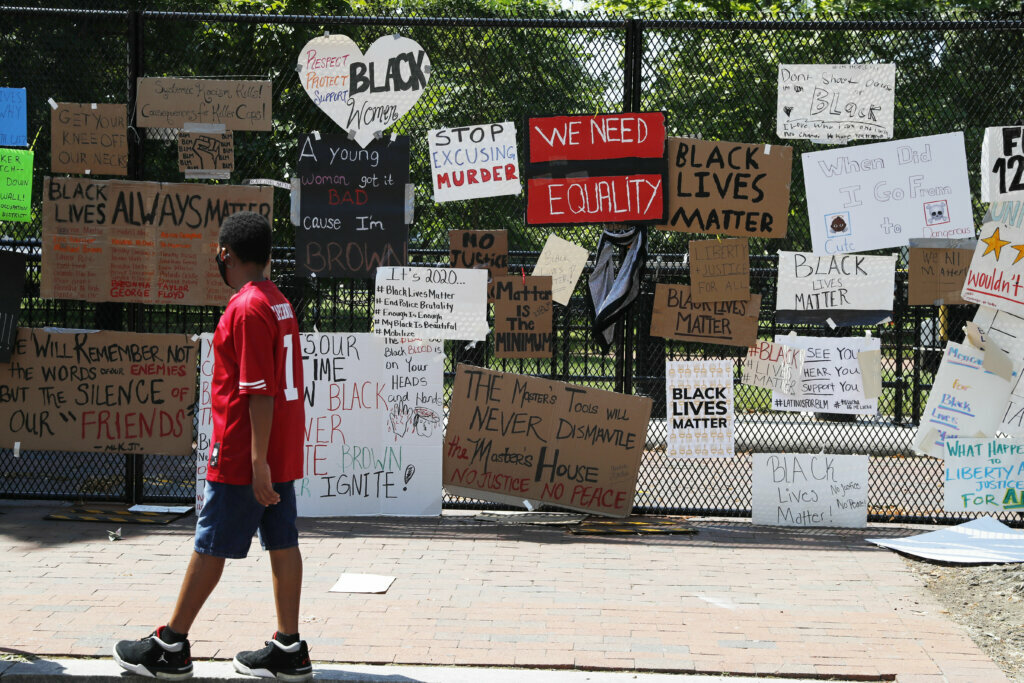
White asked for clarification on what happened on June 1, the fourth night of the protests in D.C. on Swann Street and Lafayette Square. On the reports that protesters were being corralled, Newsham said that police were enforcing curfew violation on Swann Street. He said that the reports of pepper spray being deployed will have a full internal affairs vetting. Instances that pepper spray was used was when people being placed under arrest had physical confrontation with police on the line. Another reported deployment was on Swann Street, where Newsham said there was a 911 call about a home being broken into. White said that the two cases of the use of pepper spray happened after people were corralled, and he asked Newsham to address the tactical aspect of enforcing curfew. Newsham said the enforcement of the curfew in that circumstance was to “prevent potentially any future violence” by a group he said indicated could be involved in that type of behavior based on what happened on previous nights of protests. “I was very concerned after the two nights of violence that we saw in our city, that there were potentially some folks in this group that would continue that violence,” Newsham said. He also said that police purposely enclosed the people who were in violation of the curfew that night to “effectuate arrests.” As to what happened on Lafayette Square on June 1, when officers cleared the area of protesters, Newsham said he does not know exactly why law enforcement did that. “I do know that preceding that deployment, we received information that there would be an unscheduled movement of the president,” Newsham said. “And then shortly before that move, some munitions were deployed by federal agencies. Metropolitan Police Department was not involved in that deployment.” Silverman echoed a question White asked on holding the agency responsible for the use of chemical agents on protesters. “It seems to me that was an unlawful action,” Silverman said. “There was no provocation, no violence, no probable cause of unlawful acts. And so what role does MPD have in protecting our residents from that kind of action?” “That is probably a question for our lawyers,” Newsham said. “I don’t know of a circumstance in my career where we have taken action against federal law enforcement officers who were conducting business in the line of duty. And I think that is a Department of Justice responsibility.”