Some sport utility vehicles are now being turned into germ-killing machines to protect those who ride in them.
Ford said it has developed a procedure to superheat the interior of some police SUVs, to essentially bake off the coronavirus when no people are inside.
“What it does is it allows the engine coolant to get much hotter than normal, and then it transfers the heat from the coolant system into the vehicle,” said Stephen Tyler, who oversees marketing for Ford’s police vehicles.
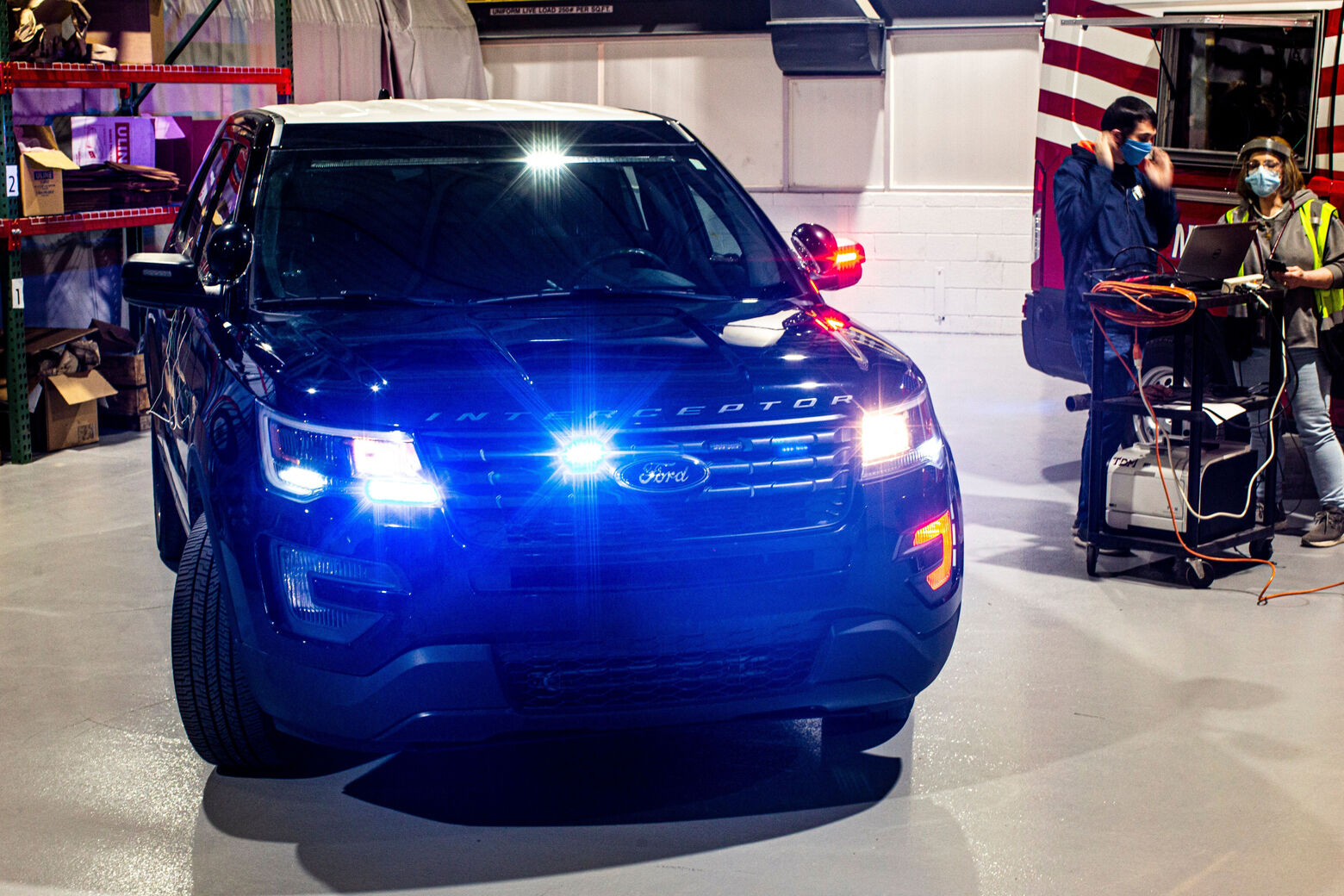
The process raises the interior temperature of the vehicle to over 133 degrees for 15 minutes.
Ford claims viral concentrations are reduced by more than 99% as a result.
The upgrade can be done to existing vehicles through a free software update, although dealers may add a labor charge, Tyler said.
The procedure is currently only being piloted in Ford’s Police Interceptor Utility, which is based on the Explorer.
While Tyler concedes there could be a larger market for the technology in the future, he said, “We wanted to get this out to help the law enforcement community first.”
- Sign up for WTOP alerts
- Northern Virginia prepares for cautious reopening
- DC-area members of Congress urge cancellation of July 4 military parade
- Latest coronavirus test results in DC, Maryland and Virginia
- Coronavirus FAQ: What you need to know
- Coronavirus resources: Get and give help in DC, Maryland and Virginia
Looking for more information? D.C., Maryland and Virginia are each releasing more data every day. Visit their official sites here: Virginia | Maryland | D.C.