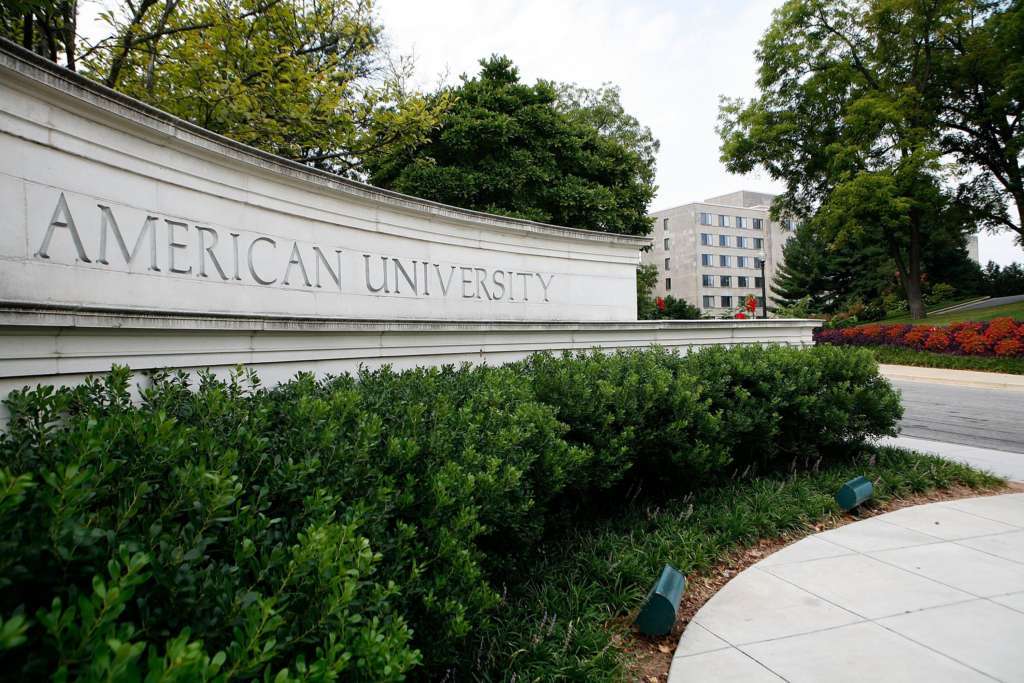
American University is projecting a two-year impact on its finances and operations from the coronavirus pandemic, and is planning for additional belt-tightening.
In a letter to AU faculty, students and community, university President Sylvia Burwell said the financial impact under the most challenging scenarios could be a total $100 million in lost revenue and increased costs for fiscal year 2021. AU’s annual budget is $775 million. A $100 million shortfall would be 13% of the university’s total budget.
Ninety-two percent of AU’s revenue comes from tuition and fees, and if enrollment falls 10 to 20% with a corresponding effect on housing occupancy, it would mean “facing intense budget pressures in every part of our operations,” Burwell wrote.
Initially, AU is instructing its schools, colleges and administrative units to find costs savings and reduce non-personnel spending. It will also draw on unrestricted income from its endowment, and use reserve and contingency funds.
More extensive measures could further impact AU’s employees. More than half of its annual operating budget is dedicated to personnel.
Those options could include stopping the employer match for retirement contributions, salary cuts, furloughs and possibly layoffs.
American University had previously forecast a $27 million shortfall for the spring and summer, and had already suspended all new construction, cut compensation for the cabinet and president, cut faculty and staff merit raises in half for those making more than $40,000 a year, and instituted a hiring freeze.