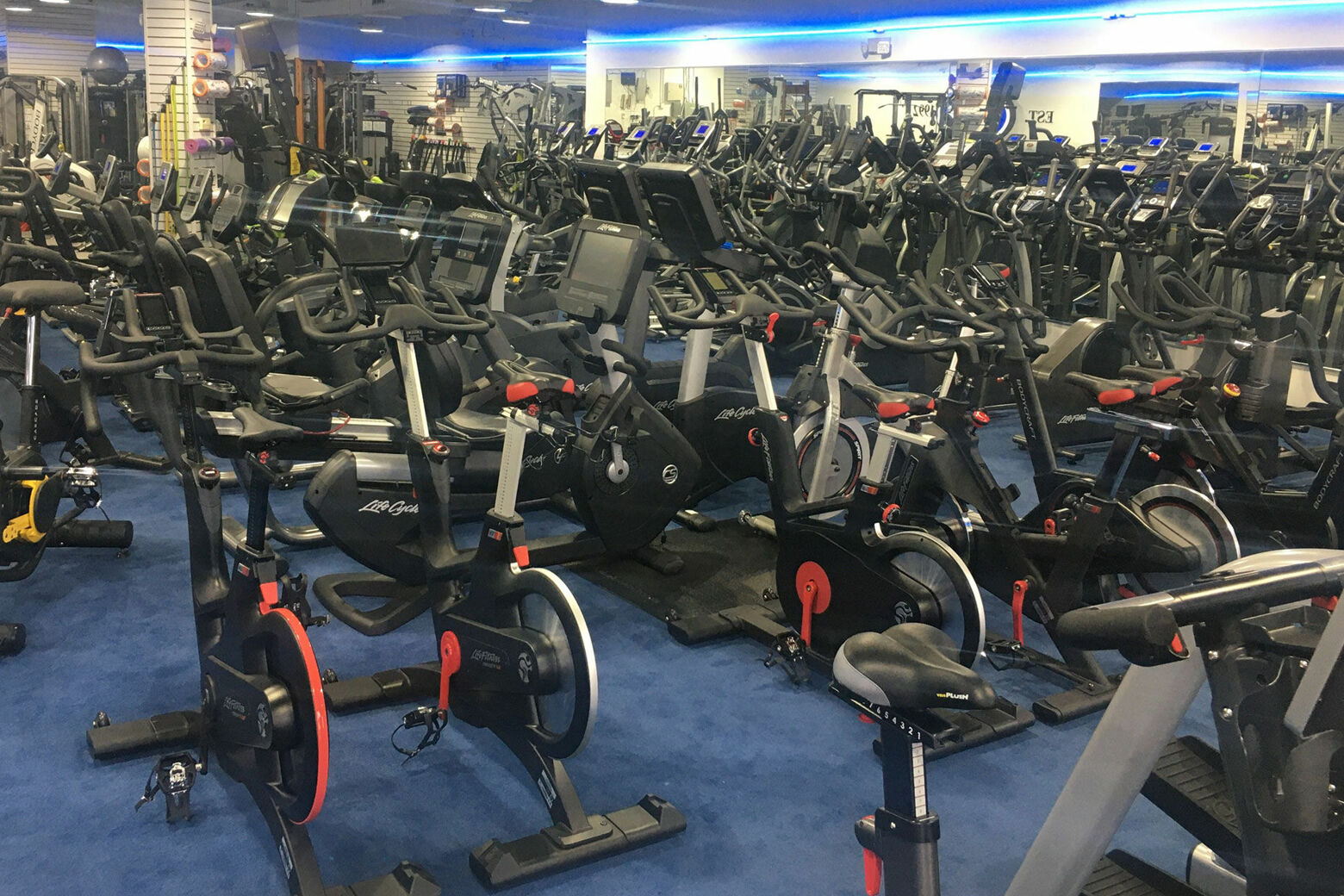
Closed gyms and orders to stay at home in Maryland, D.C. and Virginia because of the coronavirus pandemic have sparked sharply higher sales at stores offering home exercise equipment.
Several fitness retailers, including Gym Source, Johnson Fitness and Wellness Store and Fitness Showrooms are reporting an increased interest.
“We’ve gotten 50% more calls on equipment every day, it’s tremendously busy, to say the least,” said Dominic DiMento, commercial sales manager for Fitness Showrrooms in Fairfax, Virginia, and Rockville, Maryland.
Stores throughout the area report an uptick in interest among people inquiring about various home equipment, including upright and recumbent exercise bikes, elliptical trainers and strength machines.
“Treadmills always have been hot … strength equipment, dumb bells, benches, a lot of home gyms as well,” DiMento said.
- Sign up for news alerts from WTOP
- Gyms are live streaming workouts during the coronavirus outbreak
- Fitness enthusiasts think outside the gym during coronavirus
- Health experts offer these tips to counter coronavirus-related stress
- Carryout and delivery aren’t cutting it for local restaurants amid coronavirus
- Champion Little Leaguers still hope season won’t be lost
- High school baseball player writes about lost season
- Coronavirus FAQ: What you need to know
While DiMento said some deliveries can take two weeks or more, he said his stores are offering curbside service within days of ordering some items.
People hoping to stay in shape by exercising at home might be acquiring home exercise equipment for the first time, and may be concerned about the space requirements of some gear.
DiMento broke down the basic space requirements:
- Upright bicycle: 3 feet by 4 feet
- Recumbent bicycle: 3 feet by 5 feet
- Treadmill: 3 feet by 7 feet
Doctors and public health professionals have recommended regular exercise for people whose offices are closed due to the coronavirus pandemic, and with so many people in their homes, it stands to reason that exercise equipment stores have enjoyed a burst of popularity.
“Being that the gyms are all closed, people are starting to get a little bit claustrophobic. They need to exercise, relieve a little bit of stress, considering the situation that we’re all in,” DiMento said.