
This content was republished with permission from WTOP’s news partners at Maryland Matters. Sign up for Maryland Matters’ free email subscription today.
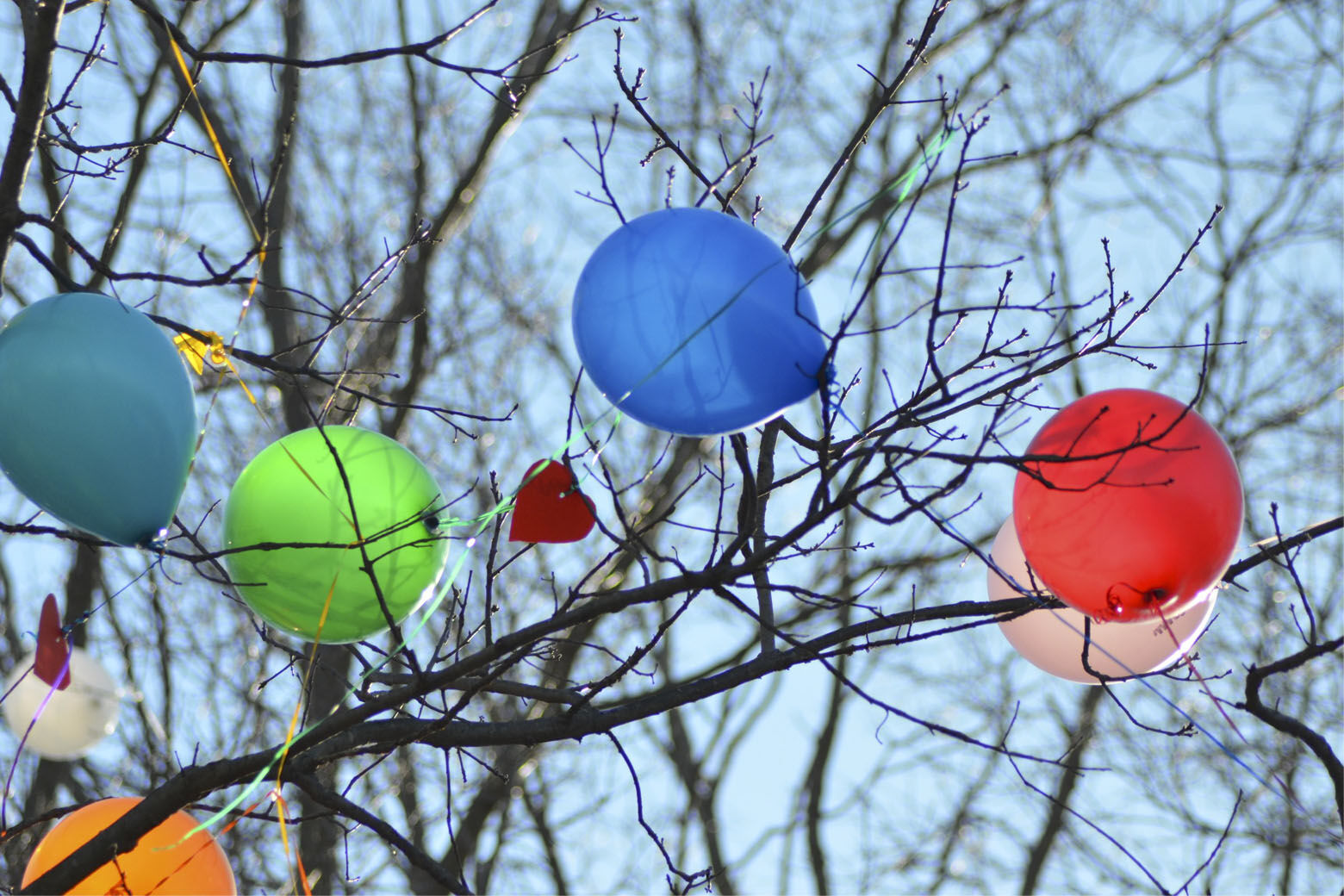
Intentional balloon releases could be banned across the state, if bipartisan-supported legislation that follows the model of several Maryland counties is adopted during this year’s General Assembly session.
The health of the planet depends on it, advocates said Thursday.
“In the best-case scenario, it’s litter, in the worst case, it kills wildlife,” Laura Bankey, vice president of conservation at the National Aquarium, testified to the Senate Education, Health and Environmental Affairs Committee.
Bankey said birds, ponies, turtles, dolphins, fish and countless other animals often mistake balloons for food.
And soft plastics are much more likely to cause death in animals than other debris, as they can block an animal’s digestive tract, Bankey said.
Senate Bill 28 would enact a civil fine of up to $250 for violators, and would be monitored by the Maryland Department of the Environment as well as local law enforcement agencies.
“The bill is not being advanced to prosecute the 7-year-old that accidentally lets go of a balloon at a birthday party,” said Jay Falstad, executive director of Queen Anne’s Conservation Association. “It’s for intentional balloon releases.”
This includes celebrations, funerals, graduations or any other event where balloons might be released intentionally.
“It’s akin to mass littering,” Falstad said. “But people don’t think of it that way.”
Falstad said he first became aware of the amount of balloon waste when he found a cluster of balloons while canoeing near his home on Unicorn Lake. When Falstad called the phone number written in pen on the balloons, he
learned that the balloons had traveled nearly 500 miles, from Dayton, Ohio, over the course of four days.
After that, Falstad started noticing balloons in farm fields, in trees, and in waterways.
“They’re everywhere,” he said.
Farmers near his home said they also found balloons in their fields and occasionally harming their livestock. When Falstad started a hashtag on Facebook, #stopreleasingballoons, hundreds of people posted pictures of the balloon debris they saw.
Falstad began pushing the legislation in Queen Annes County, which unanimously passed a ban in August, becoming the first county in Maryland to halt environmentally harmful balloon releases. Wicomico County and Frederick County followed in December.
Queen Anne’s County has not yet fined anyone for an intentional balloon release.
“We find when we pass a law, the vast majority of people will follow the law,” said Queen Anne’s County Commissioner Christopher Corchiarino (R). He said businesses now know that they cannot allow their customers to do balloon releases for celebrations or other events.
“There’s a lot of buzz — it’s really getting out there,” said Kerrie Bunting, president of Ocean Pine Chamber of Commerce, who pushed the legislation in Wicomico County. “It’s becoming a point of education, which is the point of it, not to get $250 from them.”
Unlike Queen Anne’s County, which bans only nonbiodegradable helium balloons, the state’s bill is looking to ban all balloons, with the exception of hot air balloons and balloons used for research in higher education settings.
Even biodegradable balloons can take years to break down, and when a balloon lands in the ocean, saltwater prevents it from breaking down. Balloon ribbons are not biodegradable.
“It’s raising awareness,” said Sen. Clarence K. Lam (D-Howard), the Senate’s lead sponsor of the bill. “It’s giving people a pause to think about where these things are actually going.”
The bill is co-sponsored by Sen. Mary Beth Carozza (R-Lower Shore), Sen. Ronald N. Young (D-Frederick) and Sen. Stephen S. Hershey Jr. (R-Upper Shore). The bill has received no opposition.
The crossfile, House Bill 13, co-sponsored by Del. Wayne A. Hartman (R-Lower Shore) and Del. Regina T. Boyce (D-Baltimore City), will be heard in the House Environment and Transportation Committee next Wednesday.