
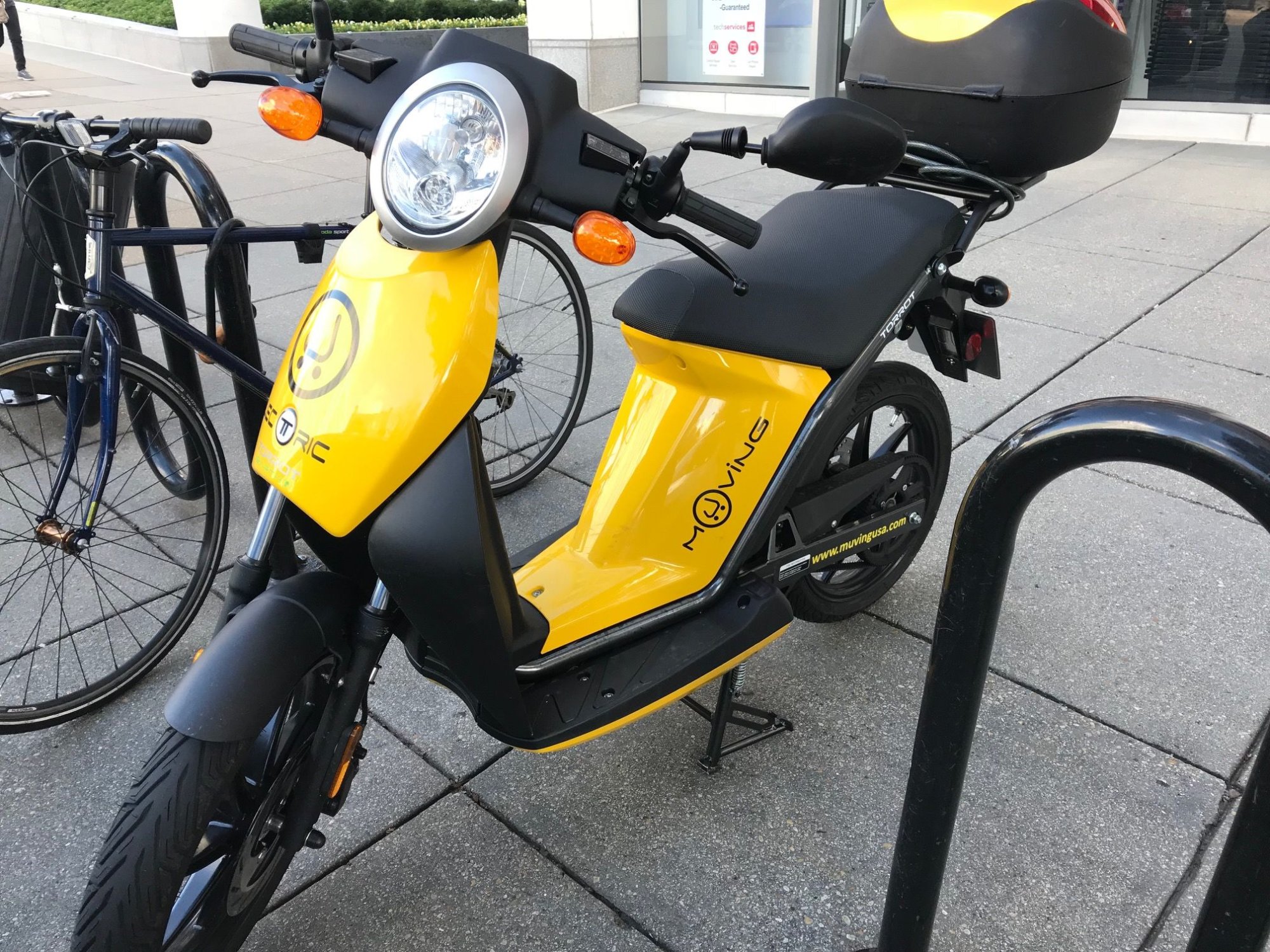
WASHINGTON — European electric scooter-sharing company Muving is eyeing entry into the District’s dockless bike and scooter program, though it is unclear if or when that might happen.
Muving, which has 2,500 scooters operating in a dozen cities in Europe, entered the U.S. market in July when its scooters hit the street in Atlanta, its first U.S. market. Muving says it is planning operations in additional U.S. cities.
The District Department of Transportation confirms Muving has been in contact, and brought one of its vehicles to D.C. to demonstrate its features — possibly the bright yellow scooter pictured above, photographed on a Connecticut Avenue sidewalk north of Dupont Circle over the weekend.
A Muving spokesperson told WTOP the company cannot disclose details of ongoing discussions with the District.
“It is important to us to partner with the city government and local DOT when considering deploying to ensure we properly follow existing ordinances or help create them for new transportation alternatives being introduced,” Muving’s Diane Maier said.
In Atlanta, like D.C.’s dockless bikes and stand-up scooters, Muving scooters are rented via app and are priced by the minute. The “Muvi” model scooters from Spain-based scooter maker Torrot can comfortably seat two and come with helmets, which are required.
They are available to rent in Atlanta from 7 a.m. to 10 p.m.
Muving would be the latest addition to D.C.’s evolving dockless bike and scooter pilot program.
Ride-hailing company Lyft rolled out its own Lyft-branded stand-up scooters across D.C. this month.
The District continues its pilot program for dockless bikes and scooters until at least the end of the year, but DDOT hopes to have a long-term plan with rules for dockless vehicles hammered out by early next year.