
School Car Wash Fundraisers Now Banned

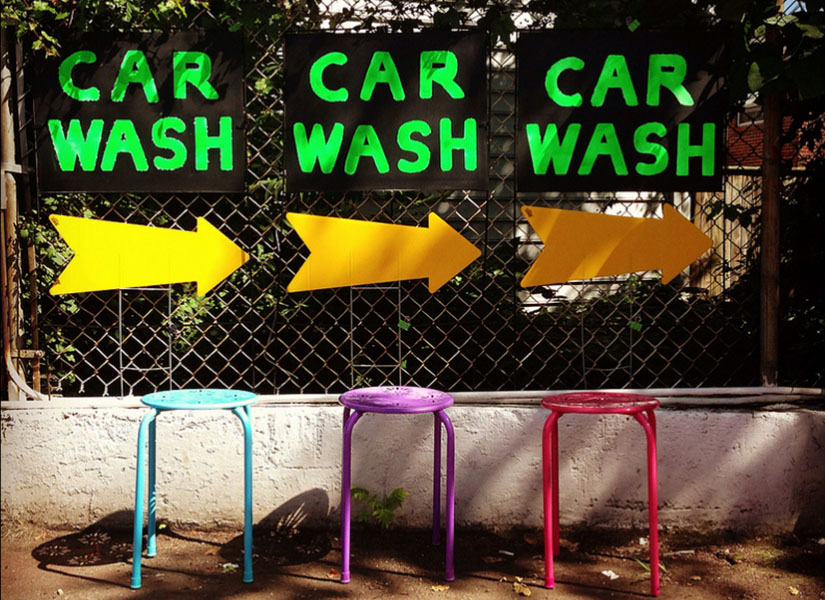
Car wash signs (Flickr pool photo by Christaki)(Updated at 2:40 p.m.) Teams, clubs and activity groups at Arlington Public Schools have been banned from doing car wash fundraisers because of stormwater regulations.

According to the county’s Department of Environmental Services, APS was issued its first stormwater permit by the state last month, after more stringent stormwater regulations were passed by the Virginia General Assembly in July 2013. The permit disallows all charity car washes on school property.

Washington-Lee, Yorktown and Wakefield High Schools notified their teams and clubs this week that they were no longer allowed to conduct such fundraisers.

“There is an important underlying reason why most types of car washing are not allowed under state and federal stormwater regulations,” said DES spokeswoman Shannon Whalen McDaniel. ”The chlorinated water, detergents, petroleum products, and other pollutants that get washed into the storm drain system are carried into our local streams, the Potomac River and ultimately, to the Chesapeake Bay. As a result, there are educational and environmental benefits that come with finding new and environmentally friendly ways to raise money for extracurricular activities.”

However, some coaches are concerned that, particularly for the more expensive sports, the ban could have negative repercussions for the athletes.

“This could have a large impact on fundraising by sports teams/boosters/school clubs in need of dollars to support the school programs,” one Washington-Lee coach, who preferred to remain anonymous, told ARLnow.com. “I am not sure how many teams are affected by this new rule. I know that my team will be, since every little bit helps deal with the expense of our sport as we try to support the kids.”
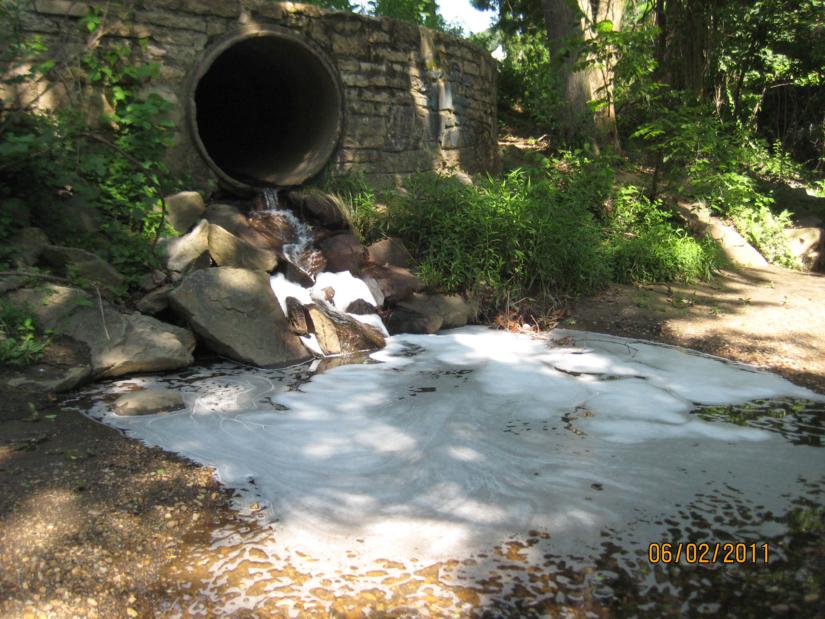
Soap suds in a waterway in Bluemont (photo courtesy Arlington County)A few years ago, the ban may have had a greater impact. But Wakefield Activities Director Noel Deskins said none of the schools teams or clubs have held car wash fundraisers there for years. Instead, they opt for bake sales, pizza sales and other money-raising endeavors.

“I think it’ll be a little easier here adjusting to the new policy,” she said.

The new regulations passed by the state last year prohibit smaller public entities, like APS, from conducting car washes, according to DES Watershed Programs Manager Jason Papacosma. All car washes that aren’t for personal use require a specific permit or written determination from the state, even charity car washes held on private property.

“Working with APS, we plan to continue educate entities looking to hold such events about the rules and environmental impacts,” Papacosma said, “and work to suggest alternatives that can raise funds and also protect the environment and comply with the environmental protection rules we are both required to follow.”

Flickr pool photo by Christaki

Don’t Settle for Student Loans to Pay for Online Education

Online college programs are becoming a more popular choice for prospective students, with one study finding that more than 6 million students enrolled in at least one online course in fall 2015. The popularity of these courses can be attributed in part to their flexibility with working adults' schedules, students' ability to progress more quickly through online programs and, oftentimes, cheaper tuition. [See 10 low-cost online bachelor's programs for out-of-state students.]Online degrees can be beneficial to many college students, but some studies have shown online learners complete their programs at lower rates than students at traditional brick-and-mortar campuses. Individuals with student loans but no degree comprise two-thirds of defaulted borrowers. Though these numbers are not encouraging, just like for traditional programs, there are ways to reduce how much you'll need to borrow for an online program to ensure you won't become one of these statistics. Don't just settle on borrowing student loans to cover the whole cost of your program and living expenses. Instead, start thinking about how to cut costs and cover your balance in different ways, such as the following. -- Grants and scholarships: Even though you are taking an online course, you can still apply and receive grants and scholarships. But your first step should be to complete the Free Application for Federal Student Aid, commonly referred to as the FAFSA, which will allow you to receive a Pell Grant if your expected family contribution is low enough. The EFC criteria and award amounts are adjusted annually, but the 2017-2018 academic year awards range from $606 to $5,920, which could significantly lower the amount you borrow annually. Your next step is to apply for scholarships. You can start by checking online scholarship search engines, such as the Salt Scholarship Search, College Board's BigFuture and Peterson's. But don't forget to take advantage of local organizations and your school's financial aid office. Both may offer scholarships that you can't find with a national scholarship search. [Review these 10 sites to kick off your scholarship search.]For instance, organizations like the Elks Club, Knights of Columbus or the Rotary Club typically offer scholarships annually to local students. Just because you're going to school online doesn't mean you're ineligible. Visit your local library for scholarship listings, and ask around town. You might be surprised how many local organizations offer scholarships. While these scholarships typically aren't large, every little bit counts. Each dollar you receive in a scholarship is a dollar you don't have to borrow and pay interest on. -- Work-study: Another option for online students may be work-study awards. Not all students enrolled in online programs are eligible, but students at some schools -- including, for example, SUNY Empire State College and Liberty University -- are. Work-study awards are not given upfront like scholarships and grants. In most cases, they are an offer to earn up to the awarded amount if you secure an eligible work-study job. While there is a misconception that all work-study jobs must be on campus, students can work for off-campus, nonprofit or public employers as long as the work is in the public's interest. You may be able to work for a for-profit employer if the job is relevant to your course of study. No matter who the outside employer is, it will need to have an established agreement with your college for you to receive work-study funds. Remember, to be eligible for federal financial aid, you must be enrolled and pursuing a degree or certificate. If you're not working toward a credential, Pell Grants and work-study won't be option, but you may still be able to take advantage of private scholarships -- just be sure to read the eligibility criteria carefully. [Explore what to know about financial aid in online programs.]-- Pay as you go: One of the great benefits to enrolling online is the flexible schedule, which can allow you to complete your college coursework around your responsibilities. But prospective students often overlook using their part- or full-time job earnings as an option for paying for college. Almost 80 percent of college students in 2015 worked at least part time while attending classes, according to the National Center for Education Statistics. By budgeting and thinking strategically about your college costs, you can likely reduce your dependence on student loans by paying a portion out of pocket. Many -- but not all -- online programs are less expensive than traditional programs and often have shorter payment periods. Six, eight or 10 weeks are common course durations. Because of the frequency of payments in an online setting, you may be well-placed to pay as you go and possibly avoid borrowing altogether. Attending college online and avoiding student loans may be challenging, but if you are willing to put in the effort, you can limit the amount you need to borrow. More from U.S. News Q&A: Understanding Student Loan Discharge Eligibility Student Loan Refinancing Isn't Right for All Borrowers
Read Next Story