
Restaurant Talk is an occasional feature written by Nick Freshman, a native Arlingtonian and co-owner of Spider Kelly’s and Eventide Restaurant in Clarendon. Photos added by ARLnow.com.
Don’t let the title mislead you. This is not a column to teach you how to win a drinking contest. Rather, I thought I would offer a few tips on how to stock your bar at home for entertaining. Hopefully, it will complement your amazing new cooking skills.
First off, you don’t need a bar. I mean, how many people actually have a bar in their house? You really need a cabinet, a fridge and some ice. The key is having the right stuff. I’ll break it down into categories — beer, wine and spirits. And since it seems we always know someone who is pregnant, nursing or on the wagon for one reason or another there is a fourth category — other.
Beer
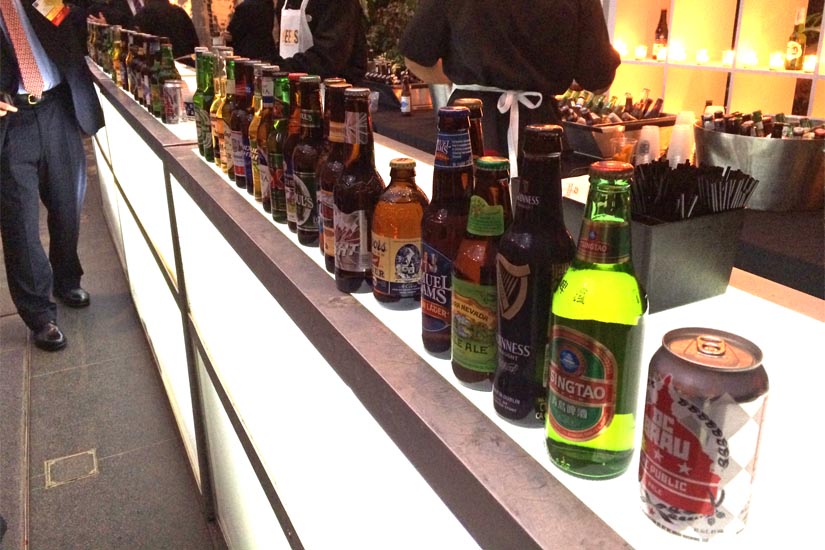 A friend once apologized to me when I was at his house that he didn’t have any beer to offer. He was ashamed and said a man should always have beer on hand to offer another man. It was endearing, if perhaps dated, and I was just as happy with a glass of wine.
That said, beer is popular, cheap and easy to store. It’s the foundation for a good home bar. I love beer, and I really love craft beers. I have a vintage kegerator, and it always has something interesting tapped that walks the edge between mainstream crafty and esoteric (think Lagunitas IPA or a Bell’s Seasonal), but I like to make my guests happy, so I always have crowd pleasers on hand. Usually it’s Miller Lite or something similar. In the summer, Corona.
I find guests gravitate towards whatever the kegerator is pouring even if they aren’t into the fancy stuff. Then, if they’re not wild about it, they can find their comfort beer. Nobody likes a beer snob, and I want my guests to be happy, not suffer through a hop-bomb that pleases only me. Pick two beers and always keep plenty around.
What I Love Now: Founder’s All Day IPA leads the pack of “sessionable IPAs.” These beers have the best part of what makes IPAs great–bold, bright hops, intense aromas and flavors, but the alcohol is dialed down to less than 5%, so you can have a few without keeling over, and your guests who might not be accustomed to the style can enjoy them as well.
Wine
 Every house should have a decent red and white around. Plenty of each. You never know when you’ll need it. The options are dizzying, so stick with what you like first off and think about what you usually cook. That way, you’re paired up all the time. Having multiple varietals on hand is ridiculous unless you are really into wine yourself. Most people will be happy drinking whatever you have as long as it tastes good, and if they aren’t, then they are wine snobs and they shouldn’t be at your house.
I find oaky Chardonnays and big Cabs to be isolating. A lot of people like them, and would drink them happily all night, but they are hard matches for food, and if you like lighter wines, you’re stuck. I prefer crisper whites and balanced reds. If the flavors are good, they’ll line up with almost anything you cook, and your hard core Chard/Cab friends might be pleasantly surprised. I love Sauvignon Blancs or dry Rieslings and Rhone Reds or earthy Pinot Noirs (especially from the Willamette Valley in Oregon). These wines have layers to them that make them fun to enjoy with or without food. And you can find good ones without breaking your bank.
What I Love Now: Spring has sprung, so give me a bone dry Sancerre. The French Sauvignon Blanc always makes me happy. Not the cheapest but always worth the investment. For reds, I also like my wines from Europe. Spanish Ribera del Dueros (mostly Tempranillo) go great with anything off your grill and delicate French Burgundies (Pinot Noir) are good choices for lighter spring fare.
Another reason to keep plenty of wine around is so you can take it with you as a gift. I hate showing up empty handed to anything, and a bottle of wine is the perfect accompaniment (unless you’re friends are teetotalers in which case I have precious little to offer. See the “other” section). My wife likes to bring dessert or apps or other food to people’s houses even if they haven’t asked for anything, and it makes me nuts.
When I host and tell people not to bring a thing, I mean it. I have the food covered, and while you might make awesome cookies or salads or cheese plates, it might not fit with what I am planning, but I will have to serve it since you brought it and it’s perishable. Thanks. Bring me wine, on the other hand, and we can pop and pour it or it’s a gift I can open later. Perfect gift, and now we are friends.
Spirits
 This is tough. To really have it all covered, you need a fair amount of bottles. It’s hard to just have one kind of liquor on hand and offer any variety. And yet, who wants to stock an entire bar’s worth of stuff for the rare occasion people are in the mood for the hard stuff? My solution is to keep a few bottles of really good stuff on hand (remember, it doesn’t go bad), and have one or two good cocktail recipes up your sleeve.
One good Bourbon will get you a long way. Neat or on the rocks and you can make your guests feel like they are in Don Draper’s office, but Bourbons make for awesome cocktails that can feel much lighter in style. Same goes for any spirit really, but I love how Bourbons can do it all.
For your cocktail recipes, stay classic. The old cocktails are always cool, and they usually have only a couple ingredients. Try a basic Manhattan — you’ll need a decent Vermouth (I like Vya) which can store in the fridge, a small bottle of bitters (try Orange bitters for something different) and some cherries (brandied are the best and keep forever; if you’re considering the neon maraschinos, slap yourself). For something lighter, try Bourbon with a little St. Germain liqueur (3:2 ratio), a little vanilla syrup and a splash of fresh OJ. That’s a retired Oddbar cocktail called The Hudson — make a pitcher and see how long it lasts.
What I Love Now: I don’t drink the hard stuff much, but this weather always gets me wanting gin & tonics. Again, you can’t beat the classics: a tall glass, ice, a squeeze of lime and I am instantly at ease — even before it kicks in.
Other
Having something other than water or soda for people who don’t drink shows that you really care about the people coming over to your house. And there are a ton of mixers that can work great with and without booze. I always have sparkling water which is great on its own, with a little juice or in a drink. A pitcher of lemonade is great to have around and tastes even better with a little booze added. There are some really great ‘natural’ sodas on the market now that work great. We like the Spindrift brand.
Also, to complement the spirits, a good selection of cheeses and charcuterie is a must. Some salami, a little cheddar, a bowl of olives and crackers. Done. It’s always good to have something around to help get things going.
And music! A group of people hanging out without music is not a party — it’s a meeting. I have meetings all the time at work. When people come over to our house, it is to have fun. Whether it’s breakfast or late night, there must be music on. You don’t have to have your whole house wired for audio, and you don’t need to make sure the music is cool. Treat it like the wine you serve — pick something you like and share it.
I hope this helps but not too much. After all, my business is built on getting you out of your house, not staying in. To combat that, I want to self-promote just a bit. We have changed our menu for spring at Spider Kelly’s and are now featuring a selection of tacos and some gluten free options among other changes. We have also switched to an a la carte brunch with some great specialty items, and we will offer that on Saturdays as well as Sunday. At Eventide, we are very pleased to announce the arrival of Antonio Burrell as Executive Chef. Antonio has had a distinguished career in Washington, and we are lucky to have him. He is already hard at work re-tooling the menu.
